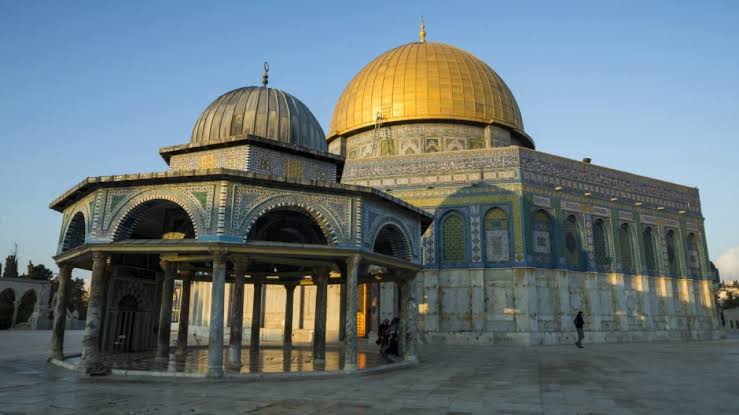

Eight Muslim and Arab countries have criticised Israel for closing the Al-Aqsa Mosque in Jerusalem during the holy month of Ramadan.
The condemnation came on Thursday after Israeli authorities shut all holy sites in the Old City of East Jerusalem, citing security concerns following ongoing airstrikes conducted alongside the United States against Iran, which have escalated into a regional conflict.
The closure affects thousands of Palestinian Muslims who traditionally gather at Al-Aqsa Mosque—Islam’s third holiest site—for Friday prayers during Ramadan.
Foreign ministers from Pakistan, Egypt, Jordan, United Arab Emirates, Indonesia, Turkey, Saudi Arabia and Qatar described the restrictions as “illegal and unjustified” and “provocative” toward worshippers.
In a joint statement, the ministers said the continued closure constituted “a flagrant violation of international law and the principle of unrestricted access to places of worship.”
Israeli police had earlier announced that all holy sites in the Old City—including the Western Wall, the Temple Mount complex and the Church of the Holy Sepulchre—would remain closed to safeguard public safety.
Israel occupied East Jerusalem during the Six-Day War in 1967 and later annexed the territory, a move that has not been internationally recognised.
Since the start of the conflict, Israeli authorities have restricted entry into the Old City to residents and shop owners for security reasons.
The eight countries stressed that Israel “has no sovereignty over occupied Jerusalem or its Islamic and Christian holy sites,” and urged the Israeli government to immediately lift the restrictions and allow worshippers access to the sacred sites.

- Jigawa ACReSAL, SARC sign MoU to strengthen GBV response - August 7, 2026
- Broda Shaggi breaks silence, promises stronger comeback - August 7, 2026
- EFCC arrests Edo spiritualist over $1,100 sextortion - August 7, 2026