


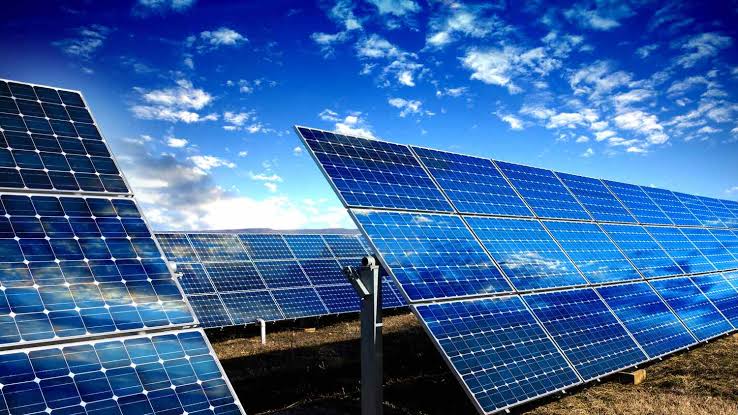
The Federal Government, through the Nigerian Electricity Management Services Agency (NEMSA), has warned Nigerians about rising fire incidents linked to poorly installed rooftop solar systems.
The agency said the growing adoption of solar energy—driven largely by unreliable power supply—has been accompanied by increasing safety concerns, particularly cases of fire outbreaks traced to faulty photovoltaic (PV) installations.
In a public notice issued by the Chief Electrical Inspector of the Federation, NEMSA attributed many of the incidents to substandard materials, poor workmanship, lack of protective devices, and failure to comply with established technical standards.
While reaffirming support for renewable energy in line with national energy transition goals, the agency stressed that safety must not be compromised.
Citing provisions of the Electricity Act 2023, NEMSA introduced new safety guidelines for rooftop solar installations across the country.
It directed that only certified professionals handle solar installations, noting that NEMSA-accredited contractors possess the required technical expertise and must present valid certification during projects.
The agency also mandated proper pre-installation assessments, including evaluating building load capacity and ensuring that rooftops are structurally sound to support solar systems.
NEMSA cautioned against the use of damaged or defective solar panels, warning that such components could trigger electrical faults, reduce efficiency, and increase fire risks. It added that panels must be mounted securely and installed with adequate spacing to prevent overheating.
On electrical safety, the agency required the installation of essential protective systems such as circuit breakers, surge protectors, isolators, and proper grounding to minimise risks from overloads and lightning.
Battery installations were also highlighted as critical risk areas. NEMSA advised that batteries be placed in well-ventilated, secure locations away from living spaces and heat sources. For lithium-based systems, it recommended the inclusion of battery management systems and temperature control measures.
The agency further instructed that solar and communication cables be routed separately to avoid interference and potential hazards, while stressing the need for neat cable management.
To ensure long-term safety and efficiency, NEMSA urged system owners to carry out routine maintenance, including cleaning panels, inspecting components, and replacing faulty parts promptly.
It warned that strict adherence to these guidelines is essential to prevent accidents, protect property, and ensure optimal system performance.

- Integrated Indigo wins PR Agency of the Year, four others at Brandcom Awards - October 27, 2026
- 64 Katsina students hospitalised after Bilharzia drug administration - October 27, 2026
- El-Rufai ‘escapes conviction’ over courtroom kiss - October 27, 2026