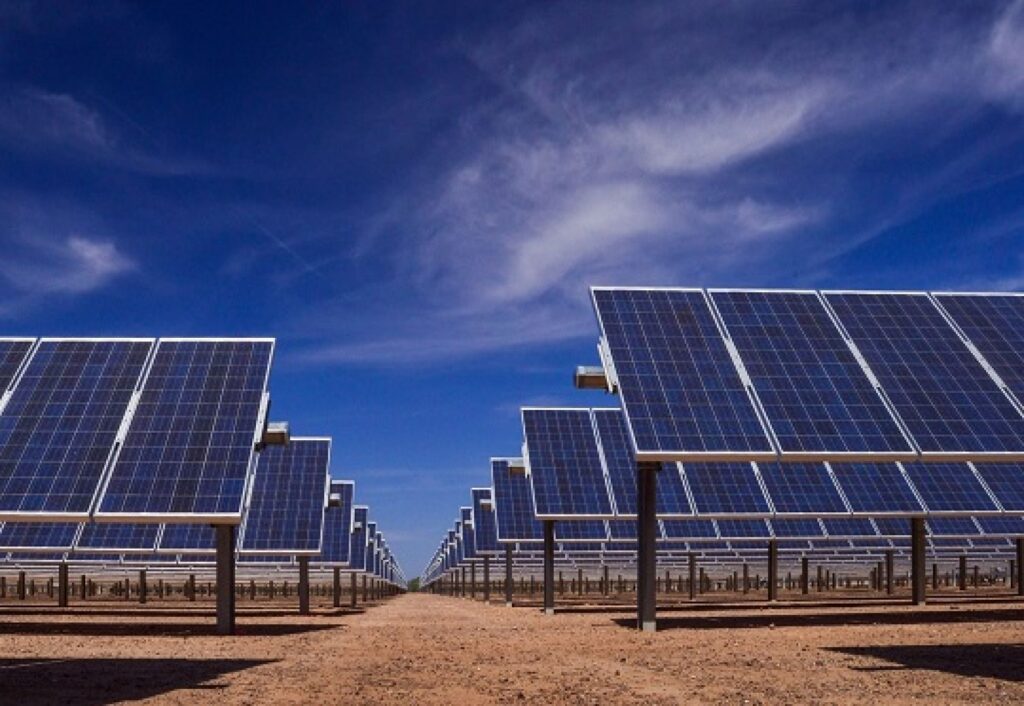
Nigeria is pursuing an ambitious energy transition agenda, with plans to achieve 209,000 megawatts (MW) of electricity generation by 2050, driven largely by solar power projects valued at about $11 billion, a report by IIR has revealed.
According to the report, 53 large-scale solar power projects are currently underway across the country, underscoring growing investor confidence in Nigeria’s renewable energy sector and supporting efforts to expand electricity access, particularly in underserved communities.
The projects form part of a broader strategy to diversify the nation’s energy mix and strengthen long-term power supply through renewable energy sources, with solar expected to play a dominant role in future capacity expansion.
Alongside utility-scale developments, the Federal Government is intensifying efforts to improve electricity access through solar mini-grids and off-grid systems.
Under a nationwide programme being implemented by the Rural Electrification Agency (REA), more than 1,300 solar mini-grids and off-grid power systems are being deployed across rural and underserved communities. The initiative includes 250 interconnected mini-grids that will feed electricity into the national grid, helping to enhance supply stability and reduce dependence on diesel-powered generators.
The programme is supported by $750 million in public funding and is projected to attract an additional $1.1 billion in private sector investment.
REA Managing Director, Abba Aliyu, described the initiative as the largest publicly funded renewable electricity project globally.
“For the first time, we are witnessing the implementation of the biggest publicly funded renewable electricity project in the world. The $750 million programme is expected to catalyse $1.1 billion in private investment and support the deployment of 1,350 mini-grids nationwide,” he said.
Aliyu noted that the government is positioning renewable energy as a major alternative source of electricity and a key component of Nigeria’s future energy landscape.
According to him, the initiative aligns with President Bola Tinubu’s vision of making Nigeria a renewable energy hub for Africa while providing electricity access to about 17.5 million Nigerians within three years.
Nigeria has already recorded significant progress in mini-grid deployment, with over 1,000 systems installed nationwide, more than half of which were financed by the REA.
The country is also advancing its Distributed Access through Renewable Energy Scale-up programme, supported by the World Bank, which aims to accelerate rural electrification through solar mini-grids, standalone systems and energy storage solutions.
The programme is expected to replace more than 250,000 diesel generators while expanding access to reliable and clean electricity.
Data from the Global Solar Council shows that Nigeria added 803MW of solar capacity in 2025, raising total installed solar capacity to approximately 1,019MW.
The country’s renewable energy drive aligns with wider continental initiatives, including the World Bank-backed Mission 300 programme, which seeks to connect 300 million Africans to electricity by 2030. Since its launch in January 2025, the initiative has reportedly provided electricity access to 44 million people across Africa.
Although gas-fired plants remain Nigeria’s primary source of electricity generation, renewable energy currently accounts for about 23 per cent of the nation’s energy mix, largely due to hydropower and solar installations.
The Federal Government has set targets to increase renewable energy’s contribution to 30 per cent by 2030 and 82 per cent by 2050 as part of its energy transition strategy and commitment to achieving net-zero emissions by 2060.
Solar power is expected to account for the bulk of future capacity growth, with Nigeria targeting 209,000MW of installed solar capacity by 2050.

- Banks shut 476 branches, cash centres in three years — CBN - September 14, 2026
- Falconets storm U-20 World Cup knockouts with 10-1 win - September 14, 2026
- 2027: My projects will secure re-election — Alia - September 14, 2026