

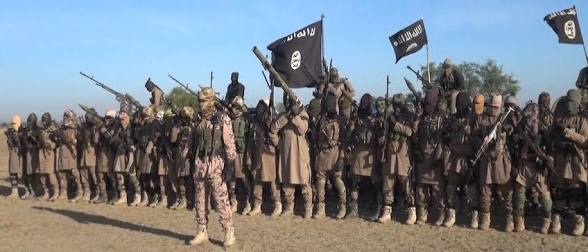

A violent internal power struggle has reportedly erupted within the Islamic State West Africa Province (ISWAP), leaving several fighters feared dead after rival commanders clashed in the group’s stronghold in the Timbuktu Triangle.
According to intelligence sources, the confrontation occurred on Friday following a disagreement between senior ISWAP commanders over a planned attack scheduled for the previous night.
Sources said one commander, identified as Abu Ali, allegedly refused to deploy fighters under his command for the operation, a decision that reportedly angered another senior commander, who accused him of sabotaging the mission and questioned his loyalty to the group.
The disagreement reportedly escalated into a gun battle between the rival factions inside the group’s enclave in the Timbuktu Triangle, one of ISWAP’s key operational bases in the Lake Chad region.
Security sources said several fighters were killed during the exchange, while one of the rival commanders was believed to have died from injuries sustained in the clash. Authorities are still working to confirm the identities of those involved and the exact casualty figure.
The incident is considered one of the most significant cases of internal fighting within ISWAP in recent months and is believed to reflect growing divisions within the group’s leadership.
Intelligence sources said the dispute followed weeks of rising tension among commanders over operational decisions, dwindling resources and the management of logistics within the enclave.
According to the sources, the disagreement over the aborted operation merely exposed deeper rivalries, with commanders increasingly competing for influence, manpower and control of supplies.
The Timbuktu Triangle has long served as one of ISWAP’s principal operational bases, housing commanders, training camps and logistics facilities used to coordinate attacks across the Lake Chad Basin.
Security analysts believe the latest clash could temporarily disrupt the group’s operational capacity as mistrust spreads among commanders and fighters.
“The incident has created divisions within the camp. There is now suspicion among different factions, and this could affect decision-making, logistics and operational planning until the leadership is able to reassert control,” one intelligence source said.
Sources also warned that the reported death of a senior commander could trigger retaliatory attacks within the group, further deepening internal divisions.
The clash comes amid sustained military offensives targeting ISWAP’s commanders, logistics networks and movement across the Lake Chad region.
Although the group remains capable of carrying out attacks, security analysts say continued military pressure has intensified competition over scarce resources, exposing cracks within its command structure and increasing the likelihood of internal conflict.

- Recapitalisation: Seven more insurers clear NAICOM’s final hurdle - August 14, 2026
- Gumi advocates public funding for marriage of women without suitors - August 14, 2026
- Deep offshore tax order could unlock $50bn investment — NNPC - August 14, 2026