

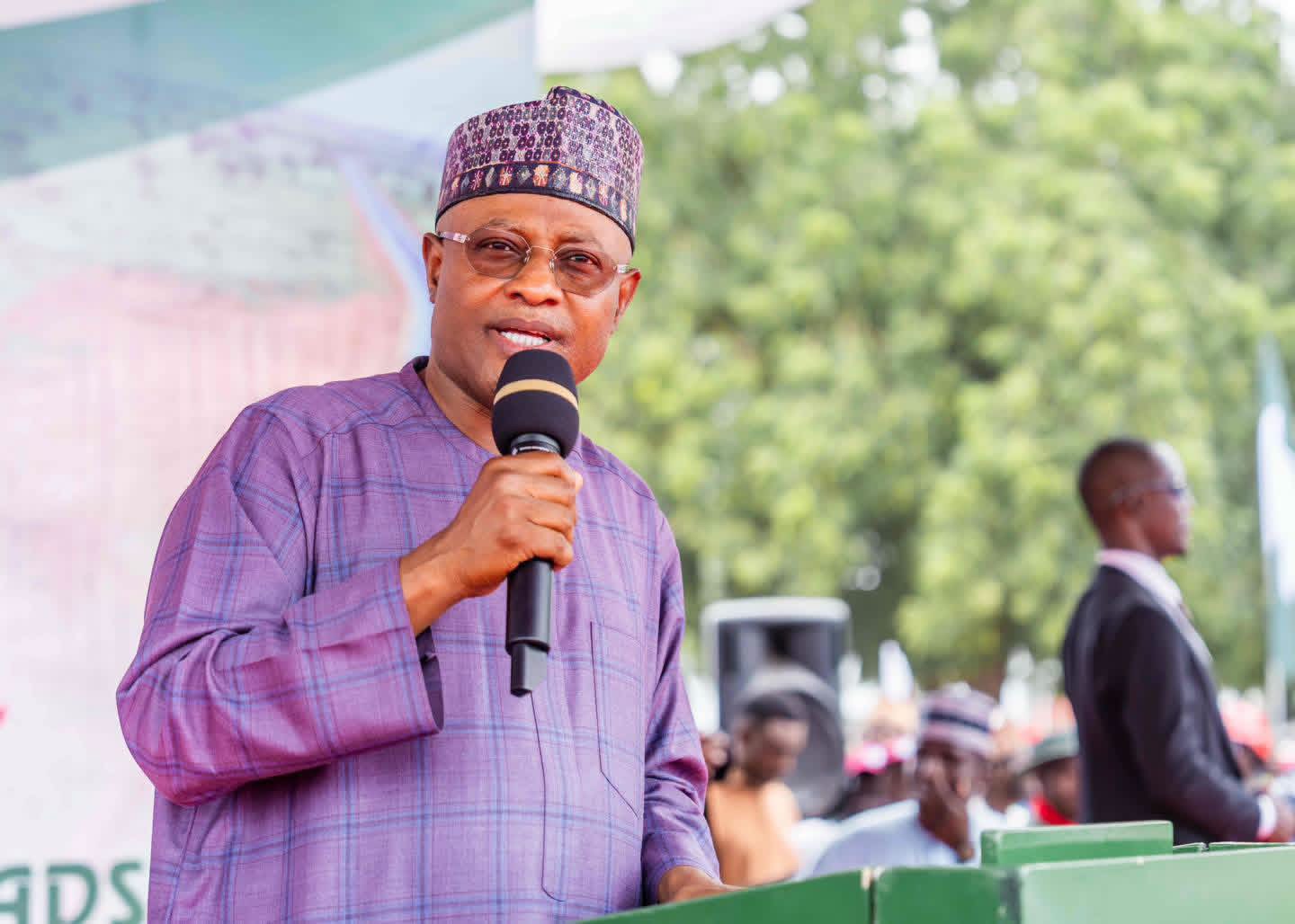
Kaduna State Governor Uba Sani has advised states seeking to replicate the Kaduna Peace Model to first identify the root causes of their security challenges and ensure that local communities take ownership of any peace-building initiative.
Sani gave the advice while receiving members of the National Economic Council (NEC) Implementation Monitoring Committee at the Government House in Kaduna on Tuesday, July 21, 2026.
Sani said his administration inherited deep mistrust between the government and residents when it assumed office in May 2023, making the restoration of public confidence its first priority.
He noted that his government also focused on promoting justice, equity and fairness to prevent politicians and “conflict entrepreneurs” from exploiting religious and ethnic divisions for political gains.
According to him, Kaduna’s security crisis previously revolved around ethno-religious violence, banditry and kidnapping, with religious conflicts claiming more lives than bandit attacks.
“We examined the situation carefully and adopted a home-grown, community-driven approach,” Sani said.
The governor said Kaduna had not recorded any ethno-religious crisis since he took office, attributing the development to inclusive governance and equitable distribution of development projects across the state’s 23 local government areas.
He added that the peace model had also significantly reduced incidents of kidnapping and banditry, prompting several states to seek guidance on replicating the initiative.
“Our advice is simple: put politics aside and focus on governance. Security and development should not be determined by political affiliation, religion or geography,” Sani said.
Highlighting the impact of improved security, Sani said over 500,000 hectares of previously abandoned farmland had been reclaimed, allowing farmers to return to cultivation.
The governor added that more than 100 schools and over 150 primary healthcare centres that were shut because of insecurity had reopened and were now fully operational.
55-year-old Bauchi community leader shot dead
Beyond security, the governor said his administration was prioritising education, healthcare, agriculture and infrastructure.
He noted that Kaduna had become a national leader in skills-based education through its vocational training institutes, which have graduated about 4,300 trainees certified by the National Board for Technical Education (NBTE).
Sani said the Kaduna State Government has also reduced the number of out-of-school children by about 300,000 from the estimated 550,000 recorded when his administration came into office, while consistently allocating at least 26 per cent of its annual budget to education.
On healthcare, Sani said Kaduna had upgraded all 255 primary healthcare centres to Level 2 status and renovated 16 of its previously dilapidated secondary health facilities.
He added that the state also completed a 300-bed specialist hospital, describing it as one of the best-equipped healthcare facilities in northern Nigeria.
The governor described agriculture as the backbone of Kaduna’s economy, accounting for about 60 per cent of employment and 43 per cent of the state’s Gross Domestic Product (GDP).
Sani said the state’s agriculture budget had risen from N1.4 billion in 2023 to about N123 billion, representing 13 per cent of the state’s budget and exceeding the 10 per cent target set under the Malabo Declaration.
Sani added that Kaduna currently leads Nigeria in the production of maize, tomatoes and ginger.
He disclosed that the government distributed 900 trucks of fertiliser free of charge to more than 240,000 smallholder farmers last year and plans to support another 240,000 farmers with fertiliser in the coming weeks.
The governor further noted that Kaduna became the first state in Nigeria to launch a Special Agro-Processing Zone, which he said would strengthen agricultural value chains and boost economic growth.

- Venezuela’s Maduro, wife beg US judge to dismiss drug trafficking charges - September 3, 2026
- Davido, Erigga trade words on ‘family money’ remarks - September 3, 2026
- 2027: Security, credible elections key to Nigeria’s future ― Sanwo-Olu - September 3, 2026