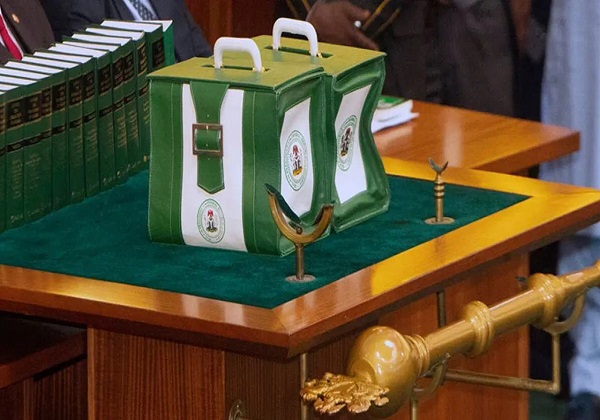
Fresh scrutiny has greeted the 2026 budget after a review of the document revealed that the Federal Government plans to spend N30.15 billion on palace construction, renovation, and furnishing, as well as church- and mosque-related projects, despite mounting fiscal challenges and growing demands for improved funding of essential public services.
An analysis released by Tracka, the accountability initiative of the BudgIT Foundation, showed that N22.15 billion was earmarked for 106 palace projects across the country, while another N8 billion was allocated for the construction, rehabilitation, and support of churches and mosques.
The revelations have sparked debate over government spending priorities at a time Nigeria is grappling with a projected N31.45 trillion budget deficit, rising debt obligations, and persistent funding shortages in sectors such as healthcare and education.
Tracka said the religious allocations comprise N1.91 billion for seven church-related projects and N6.14 billion for 52 mosque projects. The projects include the construction and rehabilitation of worship centres, provision of solar power systems, boreholes, imam residences, Islamiyya school facilities, carpets, and church musical equipment.
Among the highest allocations are N1 billion for musical and cultural equipment for churches in Abia State and another N1 billion for solar installations in mosques in Zamfara State.
The review also highlighted what it described as significant accountability gaps in the implementation of palace projects.
According to Tracka, 11 palace projects worth N5.85 billion have no clearly identified locations, making independent monitoring difficult. It further found that the palace projects were assigned to 45 Ministries, Departments and Agencies (MDAs), none of which has the statutory responsibility to construct or renovate traditional rulers’ palaces.
Instead, institutions whose primary mandates relate to agriculture, science, health, research and tourism were listed as implementing agencies.
The Federal Cooperative College, Ibadan, is expected to execute palace-related projects worth over N2.6 billion, while the Sheda Science and Technology Complex (SHESTCO) received N1.54 billion to modernise selected heritage palaces nationwide.
Despite ₦193bn education budget, Katsina school lies in ruins
Similarly, the Nigerian Building and Road Research Institute (NBRRI) was assigned projects valued at N3.92 billion, including palace halls, pavilions and solar installations across several states.
Other agencies listed include the Agricultural Research Council of Nigeria, National Horticultural Research Institute, Federal Institute of Industrial Research (FIIRO), National Productivity Centre, National Directorate of Employment, National Oil Spill Detection and Response Agency (NOSDRA), National Institute for Hospitality and Tourism, and the National Institute for Cancer Research and Treatment (NICRAT).
Reacting to one of the controversial allocations, Deputy Speaker of the House of Representatives Benjamin Kalu defended the N1 billion budgetary provision for churches in his Bende Federal Constituency.
Kalu, in a statement issued on Wednesday by his Chief Press Secretary, Levinus Nwabughiogu, said the project was designed as a youth development and value reorientation programme rather than a procurement of musical instruments alone.
He said the initiative would use faith-based organisations to promote moral values, mentor young people and address social problems, including drug abuse, sexual offences and violent crime.
According to him, after statutory deductions, approximately N780 million would be available for implementation, with about 130 churches expected to benefit in the first phase.
Kalu also clarified that no funds had been released because the 2026 budget has yet to be implemented, adding that his office had initiated a corrigendum to amend what it described as an inaccurate budget description.
Meanwhile, analysts argue that the N8 billion allocated to religious projects could make a significant impact if redirected to healthcare.
Based on prevailing prices from medical equipment suppliers, the amount could provide essential equipment for between 160 and 230 primary healthcare centres, including ultrasound machines, laboratory analysers, patient monitors, oxygen concentrators, delivery beds and other critical medical devices.

- Again, FG rules out petrol subsidy return, vows to sustain economic reforms - October 26, 2026
- Court sends man to Kuje prison for threatening to release governor’s nude pictures, videos - October 26, 2026
- Harry Kane tipped to win 2026 Ballon d’Or - October 26, 2026