RAYMOND OISE-OGHAEDE
We will be entering another important phase of our democratic governance from tomorrow, because, going by the 2027 Elections Timetable released by the Independent National Electoral Commission (INEC), electioneering campaigns for the various elective positions will officially commence tomorrow 19th August, 2027.
According to the timetable, campaigns for the Presidential and National Assembly elections will run until January 15, 2027, while campaigns for the Governorship and State Houses of Assembly elections will run until February 5, 2027.

You will agree with me that this is a very important period in the life of our democracy because it provides the political parties, candidates and the electorate with the opportunity to engage one another directly before the people eventually make their choices at the polls.
As is customary in democracies across the world, electioneering campaigns constitute an indispensable part of the democratic process. They provide the platform upon which those seeking political power are expected to present themselves, their ideas, their programmes, their records and, most importantly, their vision for the people they seek to govern.
It is through campaigns that candidates are expected to introduce themselves properly to the electorate, explain what they stand for and tell the people what they intend to achieve if given the opportunity to serve. Political parties are equally expected to present their manifestoes and explain, in practical terms, how they intend to address the social, economic, infrastructural, security, and other challenges confronting the people.
Campaigns also provide voters with the opportunity to listen to different candidates, interrogate their claims, compare their records and programmes, assess their competence and character, and ultimately make informed choices.
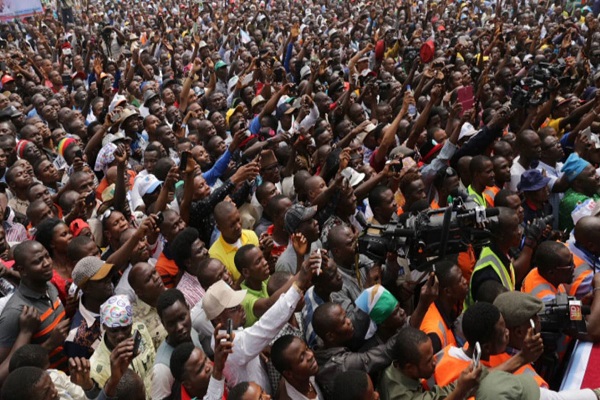
Beyond this, electioneering campaigns bring politics closer to the people. They create opportunities for citizens to participate in rallies, debates, interactive sessions, townhall meetings, and other forms of political engagement. In an ideal democratic environment, these engagements should not merely be about politicians speaking to the people; they should also provide opportunities for the people to speak back to politicians, ask questions and demand answers.
Campaigns also create an important basis for accountability. The promises made by candidates during electioneering are supposed to constitute a reference point against which their performance can subsequently be assessed if they win elections and assume office. A candidate who promises to improve security, strengthen healthcare and education, provide infrastructure, create employment, and improve the general welfare of the people should be prepared to account for those promises after assuming office.
Electioneering also promote legitimate political competition because, democracy thrives on competition. Consequently, no political party or candidate should be allowed to take political power for granted. Parties and candidates are expected to compete for the confidence, support and mandate of the electorate by convincing the people that they have better ideas, better programmes and better capacity to govern.
Campaigns equally play an important role in political mobilisation. They encourage citizens to take an interest in the electoral process, participate in political activities, ensure that they are properly registered and collect their Permanent Voter’s Cards (PVCs), and ultimately turn out to exercise their civic responsibilities on election day.
They also provide a platform for discussing issues that directly affect the people. Issues such as unemployment, poverty, healthcare, insecurity, education, infrastructure, corruption, the economy, agriculture, youth development and the general welfare of citizens should ordinarily dominate political campaigns. Candidates should be challenged to tell the people not only what they intend to do, but how they intend to do it, where the resources will come from and within what timeframe they hope to achieve their objectives.
Most importantly, electioneering campaigns provide a peaceful and legitimate means of seeking political power. In a democracy, political power is not supposed to be acquired through violence, intimidation, coercion or force. It is supposed to be sought through persuasion and ultimately obtained through the ballot box and the mandate of the people.
It is, therefore, not an overstatement to say that electioneering campaigns can significantly strengthen democratic governance when they are conducted peacefully, transparently, responsibly and, most importantly, on the basis of issues rather than hatred, propaganda, character assassination and violence.
Unfortunately, our experience in Nigeria over the years has shown that electioneering campaigns do not always conform to these ideals. Campaign periods have, at different times, been associated with political violence, intimidation, hate speech, destruction of campaign materials, thuggery, inflammatory rhetoric and other forms of criminality. It is against this background that these issues form the nucleus of this review, with a view to examining them critically and offering some suggestions on how the 2027 electioneering process can be conducted in a more peaceful, responsible and democratic manner.
So, as we enter yet another electioneering season, we must not allow the mistakes of previous electoral cycles to become our permanent political culture. We cannot continue to approach elections as if political opponents are enemies who must be destroyed at all costs. Politics is about competition for public office, not warfare.
As we all are aware, there were pockets of violence and killings in some areas of Osun state during the campaign period for the recently concluded governorship elections. More disturbingly, just few days to the election, a video went viral in which a leader of one of the political parties was alleged to have directed his supporters to kill supporters of a rival political party who ventured into certain parts of the State to campaign.
Though, the person in question said that the video was doctored, I will not delve further into the details of that particular incident, especially as the matter is already under police investigation. However, the incident is sufficiently disturbing to remind us of the dangerous direction political campaigns can take when political differences are allowed to degenerate into threats, violence and incitement.
This is precisely the kind of political culture we must collectively reject as we commence another electioneering season. No election is worth the life of any Nigerian, and no political office is important enough to justify the shedding of innocent blood.
The fact that someone belongs to another political party does not make that person an enemy of Nigeria. Political disagreements are normal and, indeed, necessary in a democracy. What is unacceptable is allowing political differences to degenerate into hatred, violence, intimidation, harassment and other forms of criminality.
The social media warriors whose stock in trade is to abuse, curse, drag and attack anyone whose political views and beliefs are not in sync with theirs should take particular note of this. The fact that you are hiding behind a keyboard or operating from the comfort of your home on social media does not mean that the long arm of the law cannot catch up with you. The Cybercrimes Act is operational, and where conduct falls within an offence recognised under the law, the offender may be investigated and prosecuted accordingly.
Osun poll: NBA urges INEC to upgrade BVAS before 2027
Political differences should never be an excuse for criminality. You are entitled to disagree with another person’s political views, campaign against his or her preferred candidate, criticise a political party and even vigorously challenge the opinions of your opponents; but, you are not entitled to harass, threaten, intimidate, incite violence against, or criminally attack people simply because they do not share your political views.
As the 2027 electioneering season begins, we must all learn to disagree without becoming disagreeable and, more importantly, without crossing the boundaries of the law. No political party, candidate or supporter is above the law, and political loyalty should never be allowed to become a licence for criminal behaviour.
Our political parties and their candidates must therefore understand that the commencement of campaigns imposes responsibilities on all of them. They must campaign vigorously, but responsibly. They must defend their records, challenge the records of their opponents where necessary, present alternative programmes and persuade the electorate. But they must do so without crossing the boundaries established by law, decency and democratic values.
The electorate also has an important responsibility. We must begin to move away from the culture of accepting every campaign promise at face value simply because it comes from a candidate or political party we support. Nobody knows it all, and nobody is a “saint” when it comes to governance. More importantly, governance is not about one individual alone; it is about institutions, policies, systems, processes and the collective responsibility of those entrusted with public office.
Candidates must therefore be questioned. Their records must be examined. Their claims must be scrutinised. Their manifestoes must be interrogated. Their past performances, where applicable, must be compared with their present promises. We must learn to look beyond slogans, political affiliations, and empty promises and ask the critical questions such as what has this candidate done before? What is he or she promising now? How realistic are those promises? What is the plan for achieving them? And, ultimately, what evidence do we have that this candidate is capable of delivering on those promises?
Our support should not be solely based on sentiments, ethnic or religious considerations, party loyalty, friendship or the magnitude of the noise about a candidate. They should, as much as possible, be informed by competence, character, credibility, policies and the candidate’s demonstrated capacity to provide responsible leadership.
Social media will, of course, play a particularly important role in the 2027 elections. While it provides an unprecedented opportunity for political engagement, information sharing and direct interaction between politicians and the electorate, it also comes with serious challenges. The spread of fake news, manipulated content, misinformation, disinformation and deliberately misleading narratives has the capacity to distort public perception, inflame passions and create unnecessary tension in the society.
We all must therefore desist from using social media as a weapon for deliberately misleading, abusing, inciting or setting people against one another simply because of our political differences. Not everything that is circulated on social media is true, and the fact that a piece of information is trending or has been shared thousands of times does not automatically make it factual.
We must learn to exercise greater responsibility. Before sharing, reposting or forwarding politically sensitive information, we should make reasonable efforts to establish its authenticity. We must not become willing participants in spreading information that is capable of creating unnecessary misgivings, misunderstanding, hatred or tension within our communities and the country at large.
The 2027 election should be about persuasion, not manipulation; information, not disinformation; issues, not hatred; and political competition, not the destruction of one another.
We must therefore exercise restraint and responsibility in the way we consume and disseminate political information. Not everything that is circulated on social media platforms is true simply because it is trending or because it supports our preferred political party or candidate.
Political loyalty should never be allowed to destroy our sense of judgement.
We should be able to criticise our opponents when they are wrong and equally acknowledge when our own candidates or political parties are wrong. Democracy cannot survive where every supporter believes that his or her party is always right and the opposition is always wrong. That is nothing more than partisan blindness.
The media, civil society organisations, religious and traditional institutions, community leaders and other influential stakeholders also have important roles to play during this period. They should encourage peaceful participation, fact based political discourse and issue oriented campaigns rather than contribute to the escalation of political tension.
INEC and other relevant institutions equally have a major responsibility to ensure that the rules governing the campaigns are enforced fairly and consistently. The credibility of the electoral process does not depend only on what happens on election day. It begins long before voters arrive at the polling units.
The manner in which political parties conduct their campaigns, the manner in which candidates engage one another, the enforcement of campaign regulations, the treatment of electoral offences and the ability of citizens to participate freely and without intimidation all contribute to the credibility of the eventual election.
This is why the commencement of the 2027 electioneering campaigns should be seen as an opportunity to do things differently.
We have been through several electoral cycles as a nation. We have witnessed the good, the bad and the ugly. We have seen elections that brought hope, elections that generated controversy and elections that left deep divisions within communities and among political actors.
We should have learnt enough from these experiences to understand that elections should not be treated as do or die affairs.
At the end of every election, Nigeria will remain our country. Political parties will come and go. Candidates will win and lose. Governments will change. Political alliances will shift. But the country will remain.
It is therefore in the collective interest of all of us to ensure that the 2027 electioneering process is conducted in a manner that strengthens rather than weakens our democracy.
Let the campaigns begin. Let candidates sell their ideas. Let political parties defend their records and present their alternatives. Let the electorate ask difficult questions. Let journalists interrogate the claims of politicians. Let legal practitioners help to interpret the laws where necessary. Let social media users verify information before sharing it. Let political opponents disagree without becoming enemies. Let the security agencies enforce the law without fear or favour. And, above all, let the people be allowed to make their choices freely, peacefully and without intimidation.
The 2027 elections should not merely be another election cycle. They should be another opportunity for us to demonstrate that, despite all the challenges confronting our democracy, we are capable of learning from our past, improving our electoral culture and moving closer to the kind of democratic system that genuinely reflects the will of the people.
The campaigns are here again.
Let us do it right.

- The human sacrifice at Minna shrine, By FUNKE EGBEMODE - September 23, 2026
- Uba Sani: Governing within the law, By MUSTAPHA MUSA - September 21, 2026
- How and why Sunrise lost $2.35bn claim against Nigeria, By GARBA SHEHU - September 19, 2026