

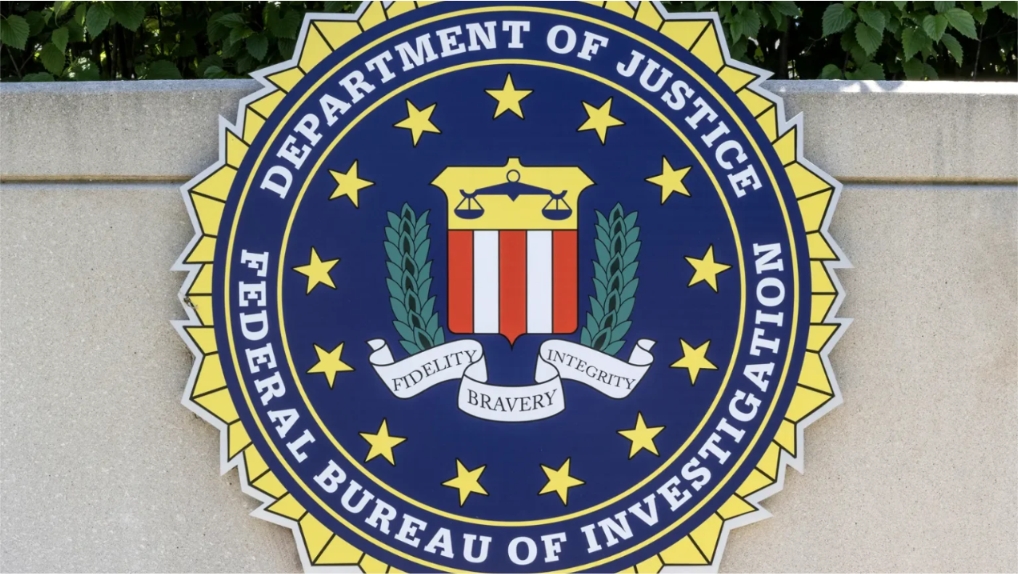
The United States Federal Bureau of Investigation (FBI) has asked a federal court in Washington, D.C., to allow it to privately explain why it withheld certain records relating to an investigation involving President Bola Tinubu.
In a motion filed on August 20, the FBI said it wants to submit an ex parte, in camera declaration to the court, arguing that publicly disclosing the full basis for some of its redactions could expose law-enforcement techniques and potentially endanger individuals.
An ex parte, in camera declaration is a written submission made privately to a judge, without being placed on the public record.
The FBI’s application relates to Freedom of Information Act (FOIA) requests filed by Aaron Greenspan, founder of PlainSite, seeking records connected to allegations of drug trafficking involving Tinubu during the early 1990s.
According to the filing, Greenspan requested the “entire FBI file” relating to Tinubu and separate FBI Form 302 interview records connected to an FBI case covering the period between 1992 and 1993.
The FBI said it had relied on several FOIA exemptions, including exemptions 6, 7(C), 7(D), 7(E) and 7(F), to withhold portions of the requested records.
The agency said disclosure of the information could, among other things, reveal law-enforcement investigative techniques and procedures or “reasonably be expected to endanger the life or physical safety of any individual.”
The FBI said it could not provide the complete justification for invoking exemptions 7(E) and 7(F) on the public record.
It therefore asked the court to permit the submission of a confidential declaration explaining the basis for withholding the information.
If the request is granted, the FBI said it would submit the declaration before August 28.
How the case began
The dispute stems from 12 FOIA requests Greenspan filed in 2022 and 2023 with six US federal agencies seeking records connected to criminal investigations into a Chicago-based heroin ring that operated in the early 1990s.
Greenspan sought records relating to four individuals, including Tinubu, Lee Andrew Edwards, Mueez Abegboyega Akande and Abiodun Agbele.
Five of the agencies initially responded with what is known as a Glomar response, declining to confirm or deny whether records responsive to the requests existed.
After challenging the responses before the US Department of Justice’s Office of Information Policy, Greenspan filed a lawsuit on June 12, 2023.
The FBI, Drug Enforcement Administration (DEA), Internal Revenue Service (IRS), Executive Office for United States Attorneys and Department of State were initially named as defendants, while the Central Intelligence Agency was later added.
In April 2025, US District Judge Beryl Howell ruled that the Glomar responses issued by the FBI and DEA were improper and ordered the agencies to lift them.
Howell held that the agencies had failed to establish that Tinubu had a cognisable privacy interest in keeping secret the fact that he had been the subject of a criminal investigation.
The judge also found that the FBI and DEA had not provided sufficient evidence to justify maintaining their refusal to confirm or deny the existence of the records.
Latest development
The latest FBI filing comes amid a separate dispute over the timeline for responding to Howell’s order concerning the release of the records.
The US Department of Justice recently sought an additional 10-day extension, but Howell granted only four additional days, setting August 21 as the deadline.
Tinubu, through his lawyers, subsequently joined the DOJ’s request for the longer extension. Howell reportedly declined the president’s request.
The FBI’s latest application does not itself establish the contents of the records sought by Greenspan or confirm the allegations contained in the underlying requests.
Rather, the agency is asking the court for permission to privately provide additional justification for why certain information should remain withheld under the FOIA exemptions it has invoked.

- SERAP sues CBN over $6.23m election funds, N1.63trn - October 11, 2026
- 2027: INEC omits NDC’s Gwarzo from Kano governorship candidates’ list - October 11, 2026
- Regina Daniels marks 25th birthday in wheelchair, opens up on health struggles - October 11, 2026