

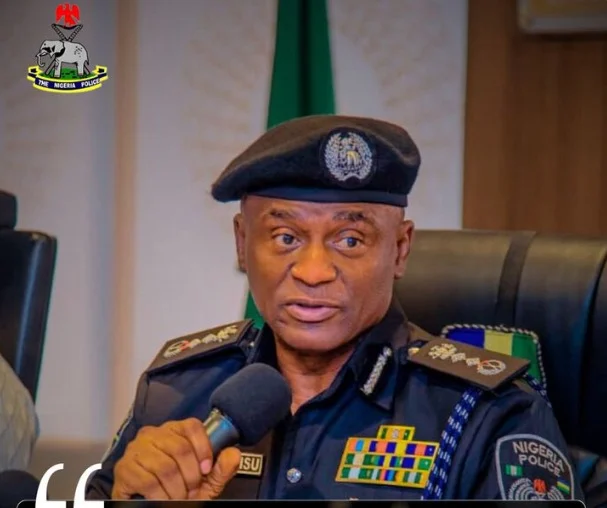
Inspector-General of Police, Tunji Disu, has appealed to Nigerians to stop turning police officers into material for social media skits, saying indiscriminate recording of personnel has become demoralising to the force.
Disu made the appeal in Abuja during a meeting with the President of the Nigerian Bar Association, Oyinkansola Badejo-Okusanya, and members of the association’s executive committee.
The meeting focused largely on preventing recurring disputes between lawyers and police personnel, with the police chief also addressing concerns within the force over the increasing use of mobile phones to record officers.
According to Disu, a recent court judgment concerning the recording of police officers appeared to trigger a wave of public recordings, with some citizens filming officers whenever they encountered them.
“The recent judgement on recording of police officers, that one really jolted our officers. And it became something of concern to us because the citizens started coming out with their phones to record police officers everywhere they saw them,” he said.
He said the trend had gone beyond situations where officers were carrying out official duties, alleging that some Nigerians had also started recording policemen in restaurants and other private settings.
“Everywhere you see a police man, start recording a police man. So this is something that was very, very demoralising to us,” the IGP said.
Disu acknowledged that members of the public were entitled to record police officers carrying out their duties in public places, but urged citizens to exercise responsibility in the process.
“We are not saying they cannot exercise their rights of recording officers in the public places while doing their jobs,” he said.
“But they should put restraints and not turn our police officers to content for their skits or anything,” he added.
The IGP also drew attention to the conditions under which many police personnel work, particularly officers deployed to checkpoints and other isolated locations.
He said some personnel spend long periods stationed on highways and in areas surrounded by forests and bushes, often in locations far removed from urban centres.
“If you look at where we have our officers on checking points, there are dangerous areas thick in the forest, thick in the bushes, on the highways, middle of nowhere,” Disu said.
He added that many of the officers remained at such locations “morning and night” as part of efforts to protect members of the public.
Badejo-Okusanya, while responding to the IGP, agreed that a distinction should be made between recording police officers in the legitimate performance of their duties and invading their personal privacy.
She cited situations where officers could be filmed while eating or relaxing, arguing that such conduct could amount to an intrusion into their privacy.
“Policemen sitting down somewhere eating and people are recording them and intruding on their privacy,” she said.
The NBA president, however, stressed that concerns about privacy should not be used to discourage transparency when officers are lawfully performing their duties.
“We should not be afraid of being transparent in the lawful execution of our duties,” Badejo-Okusanya said.
She pointed to the use of body-worn cameras by police officers in the United States, saying recording technology could serve as an accountability mechanism for both law enforcement personnel and members of the public.
“When the US introduced body cams for police officers, it was in order to promote that so that you yourself, you have a check, you know that whatever you’re doing, you have a body camera that is recording it,” she said.
According to her, properly regulated recording could help identify misconduct and provide evidence when allegations are made against police personnel.
She argued that the answer was therefore not to prohibit recording but to establish clearer boundaries governing when and how police officers could be filmed.
“We just need to understand the limits,” she said, adding that existing laws could be strengthened or clarified to prevent the right to record from being abused.
Badejo-Okusanya said the legal profession and the police should maintain cooperation because both institutions have a role to play in promoting public safety and respect for the rule of law.
She described lawyers and police officers as “partners in the same quest to ensure that we have a safe and vibrant society that respects the rule of law.”

- Kaduna: Tinubu kicks off 2027 campaign, seeks Nigerians’ mandate - October 24, 2026
- Insecurity threatens Sokoto polio vaccination drive targeting one million children - October 24, 2026
- Wike to residents: Bonny-Bodo Road justifies Tinubu’s second term - October 24, 2026