

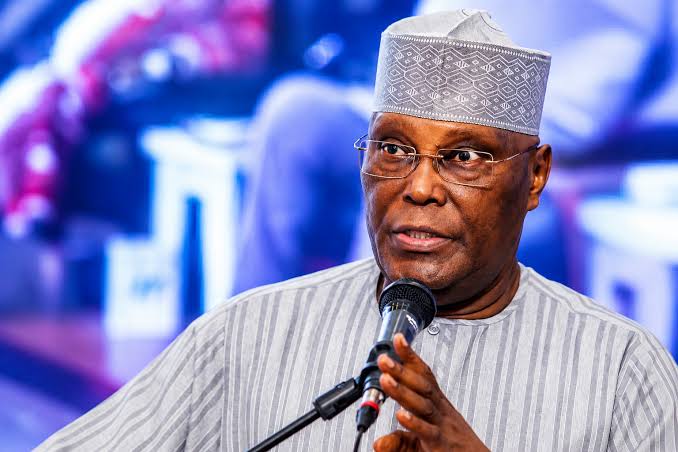
Former Vice-President Atiku Abubakar has challenged the Federal Government to account for the savings from fuel subsidy removal amid the renewed threat of a nationwide strike by university lecturers.
Atiku said the planned industrial action by the Academic Staff Union of Universities exposed the failure of the Bola Tinubu administration to translate increased government revenues into improved public education.
The former vice-president spoke in a statement issued on Sunday by his Senior Special Assistant on Public Communication, Phrank Shaibu.
ASUU had on Friday warned that its members could embark on a nationwide strike “within the shortest time possible” unless the government urgently addressed outstanding issues affecting university lecturers.
The union’s President, Chris Piwuna, said the warning followed an emergency meeting of its National Executive Council at the University of Abuja.
Piwuna accused the Federal Government and state governments of failing to fully implement the agreement reached with the union in December 2025.
The union also raised concerns over alleged non-remittance of deductions for pension contributions, staff cooperative societies and check-off dues for several months.
Reacting to the development, Atiku questioned the government’s handling of funds it had described as savings from the removal of petrol subsidy.
“If the subsidy is gone and Nigerians have paid for that decision through unprecedented hardship, then President Tinubu owes the country a simple answer: where is the money?” he asked.
Atiku argued that Nigerians had accepted the removal of subsidy on the assurance that the resulting savings would be invested in critical sectors such as education, healthcare and infrastructure.
He said the continued crisis in the university system contradicted claims that the increased revenue available to government had translated into better public services.
“The house of cards of falsehoods erected by the Tinubu administration to justify the suffering of Nigerians is collapsing before our eyes,” he said.
The former vice-president also questioned why public education remained in crisis despite repeated claims of increased allocations to state governments.
“Government officials repeatedly tell Nigerians that subsidy savings have translated into larger allocations to states. But if substantially more money is supposedly flowing to the states, why has the condition of public education not improved accordingly?” he asked.
Atiku said improved funding should be reflected in better classrooms, laboratories, hostels, teaching facilities and improved welfare for university staff.
He also criticised the administration’s student loan programme, arguing that the government had increased the cost of living and education before introducing loans to help students meet the resulting financial burden.
According to him, rising transportation, food and education costs had placed additional pressure on families already struggling with the effects of subsidy removal.
He described the situation as “government-manufactured poverty” and accused the administration of prioritising concessions, waivers and privileges for powerful interests over relief for ordinary Nigerians.
Atiku maintained that the renewed ASUU crisis demonstrated that the removal of subsidy had neither eliminated industrial disputes in the university system nor delivered the promised improvement in public services.
“Tinubu removed subsidy from the people, but he has not removed the threat of ASUU strikes,” he said.
“He has not resolved the crisis of unpaid obligations. He has not sufficiently expanded our universities. He has not made education more affordable. And he certainly has not removed the hardship confronting Nigerian families.”

- North will reclaim presidency after Tinubu’s second term — Zulum - September 13, 2026
- Atiku demands subsidy savings as ASUU threatens nationwide strike - September 13, 2026
- Kaduna cattle rustling claims 200,000 cows, kills 50 pastoralists — MACBAN - September 13, 2026