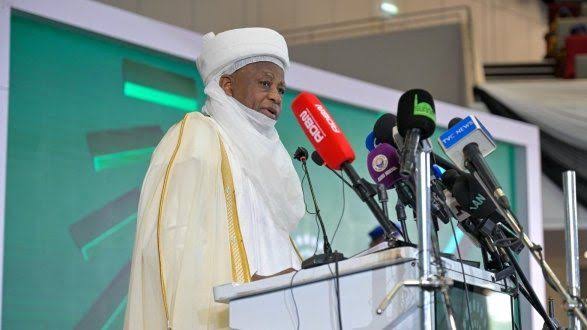
The Sultan of Sokoto, Muhammadu Sa’ad Abubakar III, and the Secretary to the Government of the Federation, George Akume, have cautioned religious leaders against turning churches and mosques into platforms for political campaigns and inflammatory rhetoric ahead of the 2027 general elections.
The two leaders spoke on Wednesday at the second 2026 meeting of the Nigeria Inter-Religious Council (NIREC) in Abuja, where they urged Christian and Muslim leaders to use their influence to promote peaceful elections and national cohesion.
The Sultan, who is a co-chairman of NIREC, urged clerics to be mindful of their sermons, prayers and public statements during the electioneering period.
He said religious leaders should pray for political office holders rather than pray for their downfall, regardless of their personal views about the performance of those leaders.
“We’re in to campaign for 2027 elections. So our religious leaders must be wary of what they say at the churches or mosques or any religious gathering,” the Sultan said.
He urged Nigerians to continue praying for the President, governors and members of the National Assembly.
“No matter how bad you think they are, continue to pray. That prayer will make God touch their lives and then they will change. And then you will see better things coming out in this country,” he said.
The Sultan also urged religious leaders to resist the temptation to use their platforms to determine political outcomes through praise or condemnation of politicians.
He called on Christians and Muslims to strengthen dialogue and avoid spreading rumours after returning to their respective communities.
According to him, genuine understanding between the two faiths was more important than mere tolerance.
“I don’t want you to tolerate me because if you tolerate me, there’s nothing you can do but to tolerate me. But if you understand me, you can work with me, I can work with you, because we know who we are to each other,” he said.
The Sultan also called for religious neutrality in the fight against corruption, urging religious leaders not to shield people accused of wrongdoing because of their religious or personal connections.
He said anybody found to have violated the law should face the appropriate legal process, regardless of whether the person was a Christian, Muslim, relative or friend.
He further warned against using proceeds of corruption to sponsor religious pilgrimages.
“God is not corrupt, so he doesn’t like corruption. So you cannot use corrupt money to send people to Jerusalem or to Saudi Arabia for Hajj or for any other thing,” he said.
CAN seeks joint action against insecurity, poverty
The President of the Christian Association of Nigeria and NIREC co-chairman, Archbishop Daniel Okoh, urged Christians and Muslims to move beyond dialogue and work together to address the challenges confronting Nigerians.
Okoh identified insecurity, poverty, unemployment, inequality, communal tensions and declining trust as issues requiring collective action.
He urged churches and mosques to use their influence to build bridges, promote reconciliation and encourage their followers to pursue the common good.
According to him, joint action between the two faith communities could cover peacebuilding, education, youth development, humanitarian assistance, poverty reduction and the protection of vulnerable people.
He also stressed the need for Christians and Muslims to recognise each other’s suffering as a shared national concern.
“When any Nigerian is killed, displaced, kidnapped or deprived of dignity, our common humanity demands that we care,” Okoh said.
Akume: Politics belongs at ballot, not worship centres
Akume, who represented President Bola Tinubu at the meeting, urged religious and traditional leaders to prevent political activities from becoming sources of religious or ethnic tension during the 2027 electioneering period.
“During the upcoming electioneering campaign, please issue the clear, unambiguous public message: that politics belongs in the ballot, not at the altar or mosque,” he said.
The SGF also urged religious leaders to prevent political thugs from using places of worship as hiding places and encouraged churches and mosques to organise joint prayers and peace initiatives.
He said NIREC would convene state-level forums before the end of 2026 involving police commands, INEC officials and religious representatives to identify potential election flashpoints.
Akume also called for peace caravans and measures to counter misinformation targeting religious communities.
On insecurity, he urged Christians and Muslims to jointly condemn banditry, terrorism, kidnapping and communal violence.
“All religions must condemn the barbaric tactics of bandits and terrorists because they debase humanity and violate all that our faiths stand for. We must stand together today saying: enough is enough,” he said.
He also called for closer cooperation between NIREC and security agencies, including possible liaison structures to facilitate the sharing of information on emerging threats.
Akume said insecurity also had economic consequences because communities could not attract investment or sustain normal social and economic activities when residents lived in fear.
The meeting also featured tributes to NIREC’s outgoing Executive Secretary, Prof. Cornelius Omonokhua, who was commended for his eight years of service to the council.

- EFCC declares ex-pension boss Maina wanted over fresh allegation - September 23, 2026
- Lagos arrests man over viral video of toddler abuse - September 23, 2026
- Sultan, SGF to politicians: Keep politics out of churches, mosques - September 23, 2026