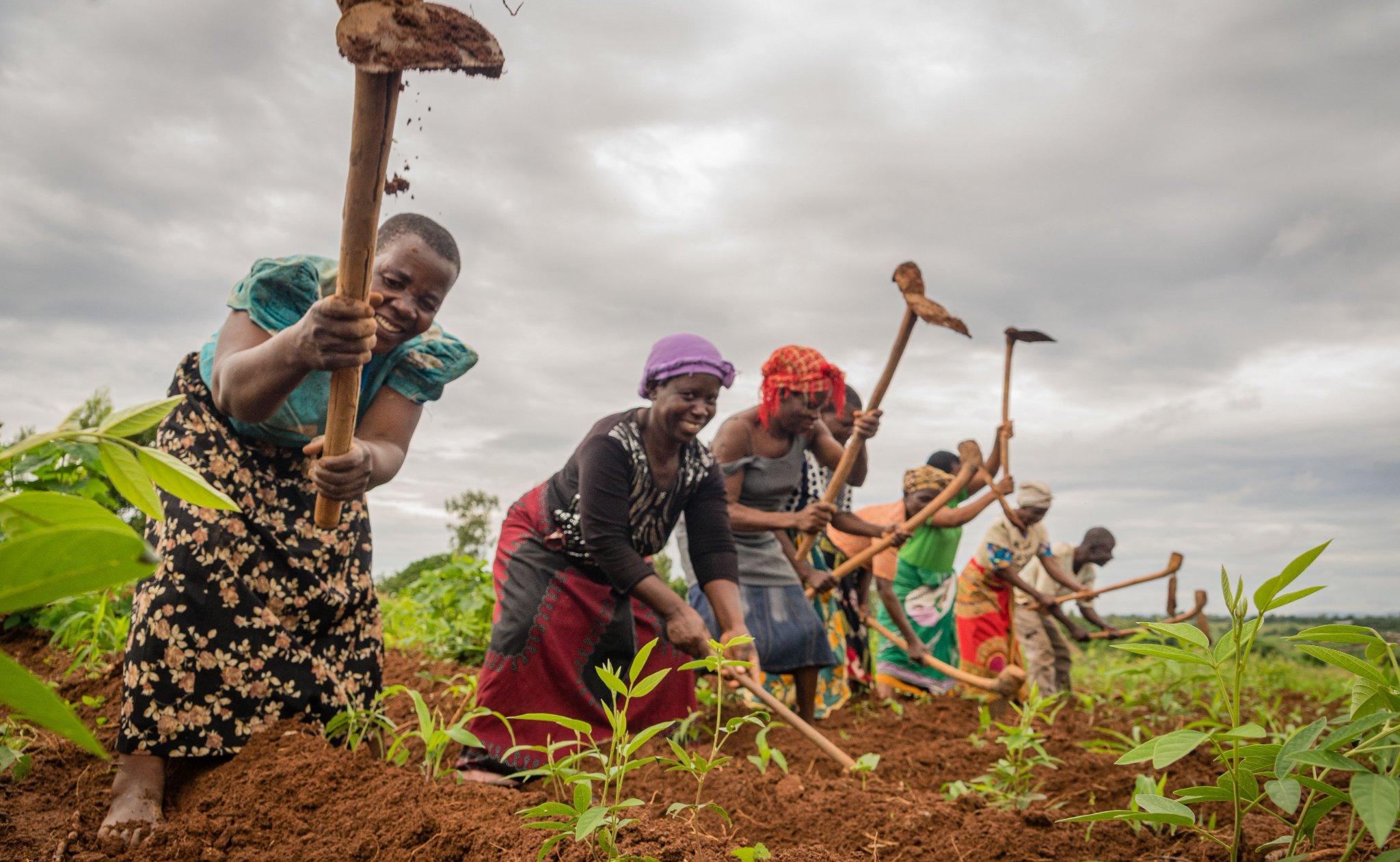
Women smallholder farmers in Nasarawa State have recorded gains in access to land, savings and participation in the state’s budget process, a new assessment has found.
The findings are contained in the SWOFON Impact Assessment 2019–2025, titled From Participation to Delivery, which reviewed the partnership between the Small Scale Women Farmers Organisation in Nigeria (SWOFON) and the International Budget Partnership (IBP) under the SPARK initiative.
The assessment covered five states — Nasarawa, Niger, Anambra, Oyo and Jigawa — and was presented by SWOFON’s Technical Officer, Hajara Ramson.
In Nasarawa, the report identified the Village Savings and Loan Association (VSLA) scheme as one of the most significant outcomes of the intervention.
It said the savings model was adapted to the local context, enabling women farmers to access small loans and avoid selling their farm produce at low prices when they urgently needed money for household expenses.
According to the report, members can obtain between N10,000 and N30,000 through the VSLA, allowing them to keep their produce until market prices improve.
“ We don’t care if our children are going back to school. We will just go and borrow and leave our crop. When the price rises, we sell it and settle the debt,” a SWOFON member was quoted as saying.
The assessment also documented improved access to agricultural land, noting that women farmers were allocated communal land at Kona in Keffi Local Government Area.
On government budgeting, the report said SWOFON Nasarawa submitted its Charter of Demands and secured acknowledgement from the state government, with the document subsequently incorporated into annual consultations.
It attributed the growing recognition of the farmers’ demands partly to SWOFON’s organised membership and sustained participation in budget processes.
Nasarawa recorded the highest agricultural capital budget execution rate among the five states assessed, at 72.6 per cent between 2021 and 2025.
Jigawa recorded 66.9 per cent, while Niger, Anambra and Oyo recorded 44.4 per cent, 29.3 per cent and 17.5 per cent respectively.
Despite the relatively high implementation rate, the report noted that Nasarawa’s agricultural allocation remained below the Maputo/Malabo benchmark.
The state allocated N57.20bn to agriculture from a total budget of N960.09bn during the period, representing a weighted share of 5.96 per cent, compared with the 10 per cent benchmark.
On the sustainability of the gains, the assessment identified Nasarawa and Jigawa as the two focal states where budget engagement had become sufficiently institutionalised to provide prospects for continuity beyond the partnership.
The report said the changes were driven by repeated engagement between women farmers and government rather than isolated advocacy activities.

- Only 21 states generated revenue from LGAs in 2025 - September 26, 2026
- IFC considers $8.6m financing for Nigerian mini-grid firm - September 26, 2026
- Afreximbank backs $29m digital system to ease East Africa border trade - September 26, 2026