

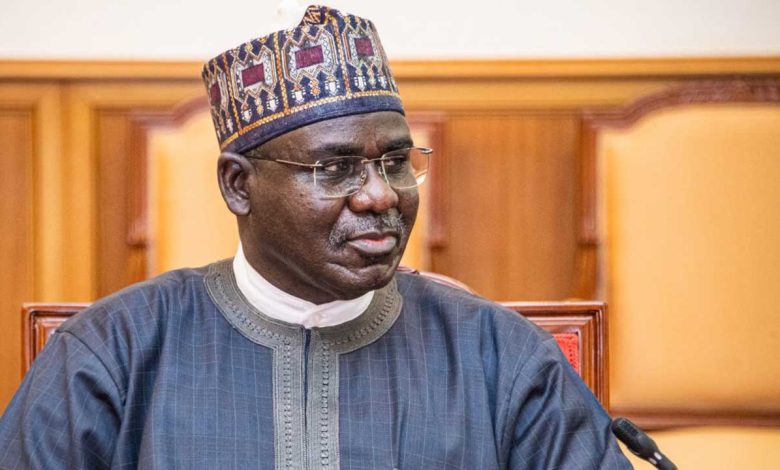
Former Chief of Army Staff, Lt. Gen. Tukur Buratai (retd.), has said the $1bn approved for defence procurement during his tenure was released to the Ministry of Defence, insisting that neither he nor the Nigerian Army received the funds.
Buratai, who spoke at the Defence Correspondents Association of Nigeria conference in Abuja on Monday, said the controversy over the funds was politically motivated and that accountability should rest with the ministry that managed the procurement process.
“The $1 billion was approved by the National Economic Council for defence procurement. Not a single dollar of that fund passed through my hands or through the accounts of the Nigerian Army, Navy, or Air Force. The funds were released to the Ministry of Defence, and the entire procurement process was handled by that ministry,” he said.
The retired army chief described allegations that the money was diverted for political purposes as “political and malicious”, saying they surfaced during the 2019 election period.
He said although the Federal Government publicly refuted the allegations at the time, the controversy continued to damage the reputations of service chiefs rather than focus attention on the institution responsible for managing the funds.
Buratai faulted the Ministry of Defence for failing to publicly explain how the money was disbursed and how contracts were awarded.
“Accountability must be properly located,” he said, urging the ministry to provide answers to questions about the procurement process.
He proposed the establishment of a Defence Procurement Transparency Portal to publish details of contracts awarded, contracting entities and delivery timelines, subject to national security considerations.
“When the media asks where the money went, the answer should come from the ministry that spent it, not from military officers who never touched it,” he said.
Buratai also called for quarterly accountability bulletins on court-martial outcomes involving alleged human rights violations and operational misconduct, provided such disclosures did not prejudice accused personnel or compromise ongoing military operations.
On allegations of human rights abuses by security personnel, he said credible claims must be investigated and, where substantiated, prosecuted.
“The military is not above the law,” he said, adding that the Armed Forces must demonstrate that their disciplinary procedures are transparent and capable of addressing misconduct at every level.
He also called for improved communication by the military and the Defence Ministry to address public concerns and ensure that reports on security operations reflect the full context of events.
Speaking at the conference, the Minister of Information and National Orientation, Mohammed Idris, said Nigeria’s security challenges required more than military force, stressing the need for reliable intelligence, modern technology and stronger collaboration among security agencies and communities.
Idris, represented by the Director-General of the Voice of Nigeria, Jibrin Ndace, said military operations remained necessary but must be complemented by efforts to address the conditions that allow criminal groups to recruit members and threaten citizens.
He said President Bola Tinubu’s Renewed Hope Agenda placed national security at the centre of the administration’s development priorities.
According to him, the government is pursuing military modernisation, intelligence-led operations, improved surveillance and better coordination among security and intelligence agencies.
Idris disclosed that Tinubu directed the preparation of a comprehensive National Threat Assessment and a rolling five-year Strategic Defence Operations Plan in August 2026 to improve coordination, set priorities and guide resource deployment.
He also said the President had approved salary increases of between 30 and 80 per cent for Armed Forces personnel, effective September 2026, describing the decision as recognition of their sacrifices.
The minister said security efforts must produce tangible benefits for Nigerians, including safer communities and roads, protection for farmers and businesses, and safer schools.
On media coverage of security issues, Idris urged journalists to verify information and report responsibly to prevent rumours from triggering panic or undermining military operations.
He, however, said responsible reporting should not shield the government or security agencies from scrutiny.
“Journalists must keep asking difficult questions and hold institutions accountable, while respecting legitimate operational sensitivities,” he said.

- Nigerian Army expands to 12 divisions as COAS seeks stronger joint operations - October 12, 2026
- EFCC arraigns ALSCON, director over N582.4m money laundering - October 12, 2026
- FG withdraws charges against fake PFIPC DG, Adeyemi - October 12, 2026