

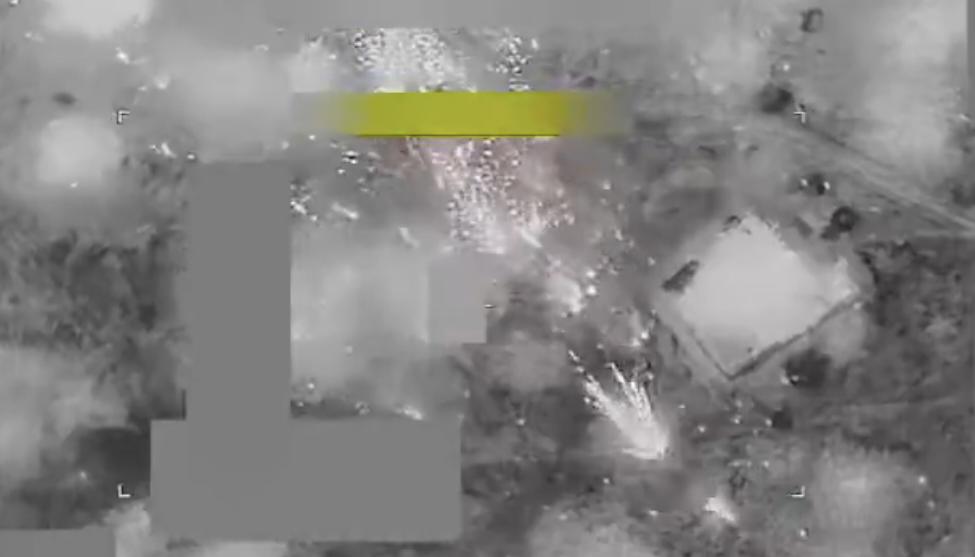
The United States Africa Command (AFRICOM) has released footage of a coordinated military operation in northeastern Nigeria that it says led to the killing of senior Islamic State commander Abu-Bilal al-Minuki and several of his lieutenants.
According to AFRICOM in a statement on Saturday, the operation was conducted on May 16, 2026, under the direction of the United States President and the Secretary of War, in close coordination with the Government of Nigeria.
Initial battle damage assessments indicated that “multiple terrorists, including Abu-Bilal al-Minuki, the director of global operations for ISIS, were killed during the operation,” with no casualties reported among U.S. forces.

The command said the strike targeted a significant ISIS presence in northeastern Nigeria, describing it as part of sustained joint counterterrorism efforts in the Lake Chad Basin region.
U.S. Air Force General Dagvin Anderson, AFRICOM commander, said the mission demonstrated strong military cooperation between both countries.
“As President Trump shared, AFRICOM, in coordination with the Armed Forces of Nigeria, successfully executed a mission that eliminated Abu-Bilal al-Minuki and multiple other ISIS leaders,” he said.
Anderson added that the operation followed months of intelligence coordination between both forces, describing it as evidence of “exceptional partnership” in the fight against terrorism.
He further stated that al-Minuki played a key role in ISIS global operations, including strategic planning, financing networks, propaganda, weapons development, explosives production, and drone deployment.
President Bola Tinubu had earlier described the operation as a “daring joint mission” that inflicted significant losses on ISIS networks operating in the region.
The release of the footage comes amid ongoing joint operations by Nigeria and the United States targeting extremist groups across the North-East and the wider Lake Chad Basin.
Security analysts say the development marks a significant setback for ISIS-linked operations in West Africa, though they caution that militant networks in the region remain active and adaptable.

- APC mocks Obi over claim of victory without evidence - October 9, 2026
- Nigerian Army graduates new Special Forces battalion to tackle terrorism - October 9, 2026
- Court remands terrorist over 170 AK-47 rounds in Kuje prison - October 9, 2026