The All Progressives Congress Presidential Campaign Council has challenged former Vice-President Atiku Abubakar to explain the legal, fiscal and operational framework for his proposed subsidy on petrol refined locally.
In a statement on Sunday, the council’s spokesman, Dele Alake, questioned how the proposal would operate under the Petroleum Industry Act 2021 and whether government support to domestic refineries would necessarily translate into lower pump prices for consumers.
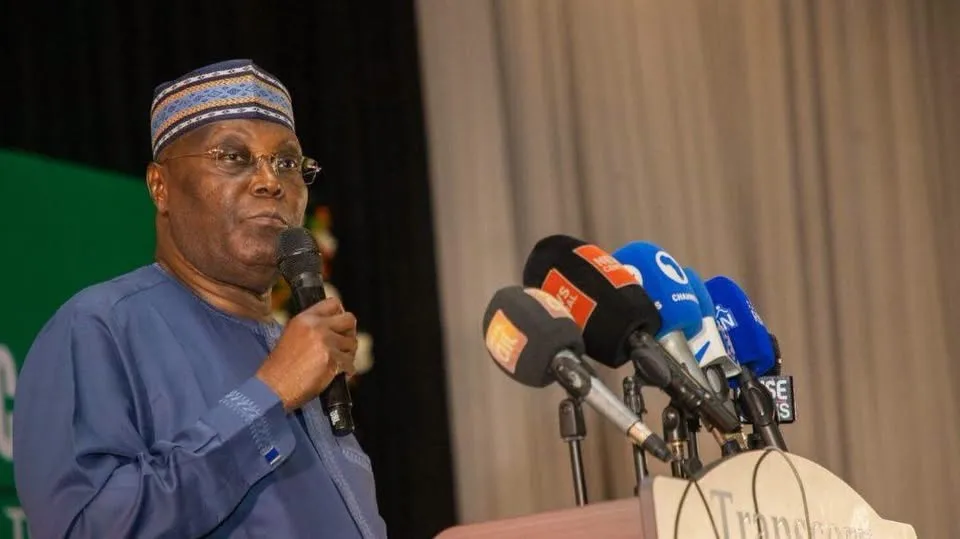
Atiku had, at a press conference in Abuja on Friday, reiterated his proposal for a “production subsidy” for locally refined petrol, saying the measure would reduce production costs and ultimately lower pump prices.
But the APC council cited Section 205(1) of the Petroleum Industry Act, which provides for wholesale and retail prices of petroleum products to be determined under unrestricted free-market conditions.
Alake also referred to a recent statement by the Nigerian Midstream and Downstream Petroleum Regulatory Authority, which said it does not fix pump prices or issue administrative price templates except where statutory conditions for intervention are met.
He challenged Atiku to explain whether refineries benefiting from his proposed subsidy would be required to sell petrol at a prescribed price.
“If the answer is yes, he should identify the legal framework under which the government would impose that price condition and explain how it would operate consistently with the Petroleum Industry Act,” Alake said.
He added that if refiners would not be compelled to reduce their prices, Atiku should explain how the proposed government support would guarantee cheaper petrol for consumers.
The APC-PCC also demanded details of how the proposal would be funded, particularly if the government supplied crude oil to domestic refineries at preferential prices.
According to Alake, such a discount could reduce the value of crude accruing to the Federation and consequently affect revenues available to the federal, state and local governments.
The council claimed that the proposed intervention could cost between N17 trillion and N21 trillion annually, depending on the level of discount, the volume covered and whether the subsidy would apply to the entire crude barrel or only petrol supplied to the domestic market.
It asked Atiku to disclose the proposed subsidy rate, annual spending limit, volume of crude or petrol to be covered, funding source and mechanism for ensuring that consumers benefit from lower pump prices.
The council also demanded details of measures to prevent diversion, smuggling and fraudulent claims, as well as clarification on whether implementing the proposal would require amendments to the Petroleum Industry Act.
Alake further questioned Atiku’s current position on subsidy against his previous support for deregulation of the downstream petroleum sector.
He recalled that Atiku, while speaking at the Lagos Business School in November 2022, described the petrol subsidy regime as fraudulent and pledged to complete its removal.
He also cited Atiku’s August 25, 2026 post on X in which the former vice-president said, “I will restore it!”
The APC-PCC spokesman said Atiku should explain how his proposed arrangement would avoid the problems associated with the former subsidy regime.
The council contrasted Atiku’s proposal with the Tinubu administration’s focus on compressed natural gas and electric mass transit as alternatives aimed at reducing transportation costs.
Alake said more than 120,000 vehicles had been converted to CNG, while the Federal Government was working with state governments to expand alternative-energy transport.
He said commuters on some routes served by CNG and electric buses were already paying lower fares than those charged by conventional commercial operators.
The council acknowledged the impact of high petrol prices on Nigerians but maintained that the government would continue pursuing measures aimed at reducing transportation costs while maintaining a deregulated downstream petroleum market.
It urged Atiku to publish a detailed policy document and obtain an independent legal and fiscal assessment of his proposal.
“Until he does so, his production-subsidy plan remains an uncosted promise without a clearly identified legal or operational framework,” Alake said.

- Bago vows probe as Niger holds prayers for 37 miners who died in custody - September 20, 2026
- Troops rescue two kidnap victims, arrest 11 in Plateau - September 20, 2026
- APC challenges Atiku over proposed petrol subsidy - September 20, 2026