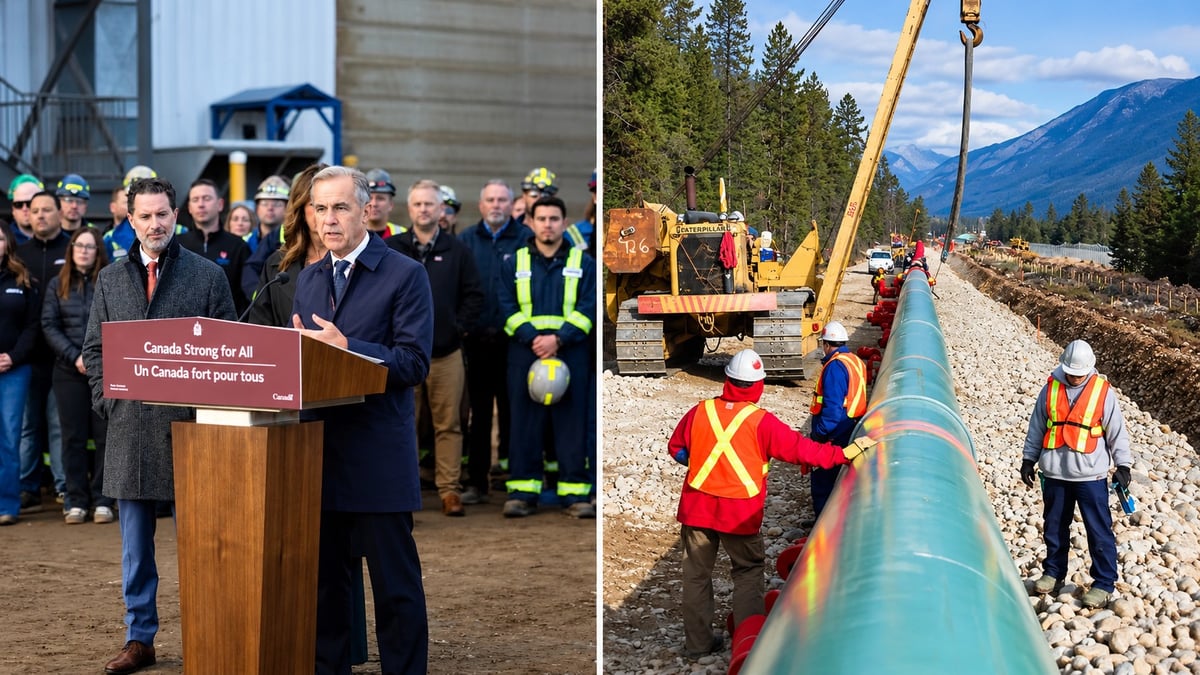
Canada is set to fast-track regulatory approval for a proposed crude oil export pipeline to its Pacific coast as part of efforts to expand energy exports beyond the United States and strengthen the country’s economy.
Prime Minister Mark Carney announced on Thursday that the proposed Pacific Link pipeline would be designated a project of national interest, allowing it to undergo a single federal regulatory review instead of multiple approval processes.
Carney said the federal government aims to complete the approval process by September 1, 2027, describing the project as central to Canada’s long-term economic strategy.
“A pipeline to the west coast is part of our mission to transform our economy, to double our non-U.S. exports over the next decade and unlock our full potential as a global energy superpower,” Carney said during a visit to Fort McMurray, the heart of Alberta’s oil sands industry.
The pipeline, first unveiled in July, is expected to transport one million barrels of crude oil per day to Canada’s west coast, opening new export routes to international markets, particularly in Asia.
According to the Canadian government, the project could create about 140,000 jobs, contribute more than C$20 billion ($14 billion) annually to the country’s Gross Domestic Product and generate over C$100 billion in government revenue by 2060.
The project forms part of Ottawa’s broader plan to reduce Canada’s heavy dependence on the U.S. market, which currently receives more than 90 per cent of the country’s crude oil exports through existing pipeline networks.
The move also comes amid ongoing trade tensions with the United States, including tariffs imposed under President Donald Trump, prompting Canada to seek alternative export destinations.
Oil prices steady as traders weigh US-Iran tensions, Middle East supplies
Canada currently operates only one major oil export pipeline to its west coast, the 890,000-barrel-per-day Trans Mountain pipeline, whose expansion was completed in 2024 but is already operating at full capacity.
The prime minister said the new pipeline would significantly increase Canada’s presence in global energy markets, particularly as major Asian economies look to diversify oil supplies beyond the Middle East.
The Pacific Link pipeline will be developed by the government-owned Trans Mountain Corporation in partnership with Pembina Pipeline Corporation.
The Alberta government estimates the project will cost between C$35.2 billion and C$43.7 billion, with ownership expected to remain largely in the hands of the federal and Alberta governments.
As part of the proposal, Indigenous communities will be offered at least a 10 per cent ownership stake in the project.
Carney also pledged extensive consultations with Indigenous groups, acknowledging that previous pipeline projects in Canada faced strong opposition from environmental organisations and Indigenous communities, leading to cancellations, legal challenges, cost overruns and construction delays.

- Canada fast-tracks Pacific Link pipeline to boost oil exports, cut reliance on US - October 2, 2026
- Over 400 schools shut as student protests turn violent in France - October 2, 2026
- Oil prices steady as traders weigh US-Iran tensions, Middle East supplies - October 2, 2026