The Centre for Information Technology and Development (CITAD) has launched a digital platform to mobilise communities and track the planting of one million trees across Nigeria, warning that accelerating deforestation and desertification are worsening climate threats in Northern Nigeria.
The platform was unveiled in Kano as part of the organisation’s Plant One Million Trees (P1MT) campaign, which seeks to have one million trees planted between September 2, 2026, and September 1, 2027.
Executive Director of CITAD, Dr Y.Z. Ya’u, said the initiative was conceived in response to the growing environmental degradation and loss of tree cover across Northern Nigeria.
Ya’u said the campaign was not a ceremonial tree-planting exercise but a community-driven initiative designed to encourage citizens, schools, governments, civil society organisations, traditional institutions and the media to take responsibility for planting and nurturing trees.
He said the newly unveiled platform would enable participants from different parts of the country to upload information on trees planted, including their locations and species, allowing the organisers and the public to monitor progress towards the one-million-tree target.
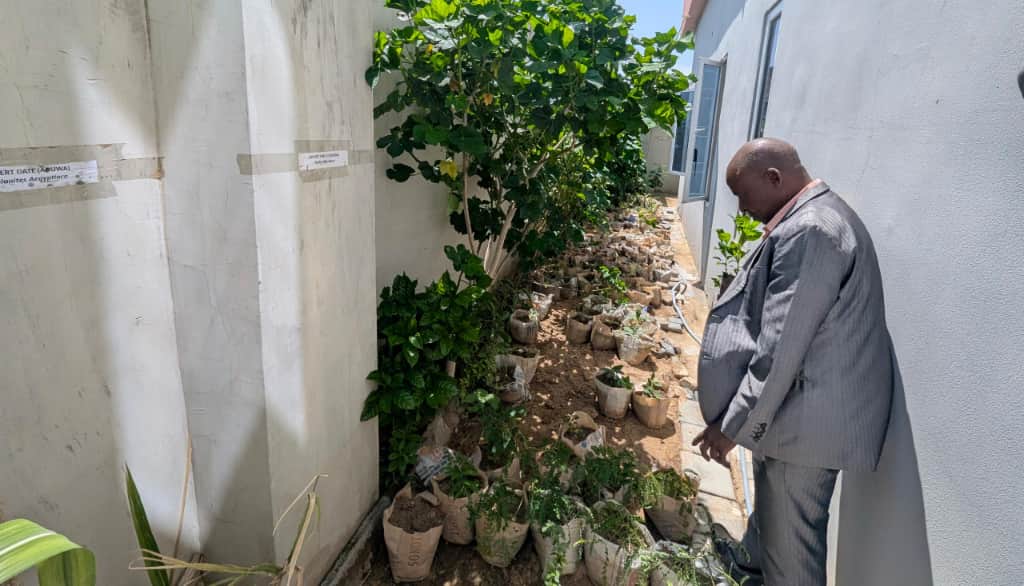
According to him, the campaign had already recorded about 200 trees, including those planted in eight secondary schools during a pilot exercise and about 100 trees planted in communities in Jama’a.
“We have planted about 200 trees and not 1,000 trees. I think this is important because it promotes transparency,” Ya’u said.
He explained that the campaign was deliberately designed with a one-year timeframe to encourage sustained participation rather than a one-off exercise.
“We have given us a horizon from 2nd September 2026 to 1st September 2027, in which our objective is to see one million trees planted,” he said.
Ya’u identified Kano and several other Northern states as increasingly vulnerable to desertification, deforestation, flooding and other effects of climate change.
He said states including Sokoto, Kebbi, Zamfara, Katsina, Jigawa, Yobe and Borno required particular attention because of their proximity to the advancing desert, while Kano, Bauchi and Gombe were also areas of concern.
According to him, the campaign is focused on environmentally fragile areas rather than treating every part of the country equally.
“Although we say across Northern Nigeria, our focus is actually areas that are environmentally fragile,” he said.
Ya’u warned that continued destruction of forests was accelerating desertification and contributing to conflicts over land and water resources.
He linked the depletion of vegetation to increasing pressure on natural resources, saying the loss of trees was also contributing to uncontrolled water flow, soil erosion and flooding.
“The more you cut trees, the more you allow desert to accelerate and encroach,” he said.
He added that the consequences extended beyond the environment to livelihoods and security, noting that competition over increasingly scarce land and water resources could worsen farmer-herder conflicts.
Ya’u also described trees as a natural defence against the effects of climate change because they absorb carbon dioxide and help regulate the environment.
He said increasing dependence on vehicles, generators and other sources of emissions was contributing to the accumulation of greenhouse gases, while the loss of vegetation was reducing the environment’s capacity to absorb them.
“Trees are very, very important and crucial to human survival,” Ya’u said.
“More importantly, they are the sink through which dangerous greenhouse gases such as carbon dioxide are absorbed.”
He said the effects of climate change were already being experienced across the region through irregular rainfall, flooding, shortened and unpredictable seasons and water shortages.
“Right now, we are seeing a lot of consequences of climate change — rainfall shortage, frequent flood, flash flood, compressed seasons, unpredictability, and so forth,” he said.
The CITAD director said the organisation was also concerned about the disappearance of indigenous tree species, arguing that tree planting should not focus solely on the number of trees planted but also on preserving species that are native to Northern Nigeria.
He said the initiative would therefore encourage the planting of indigenous species capable of surviving the region’s changing climatic conditions.
Ya’u said CITAD had partnered with relevant stakeholders, including the Kano State Ministry of Environment and the Ministry of Education, to expand the campaign.
He said the Ministry of Environment had provided seedlings for redistribution to schools and communities, while the Ministry of Education had granted approval for the campaign to engage secondary schools.
The organisation also plans to work with the media to create public awareness and encourage wider participation.
Ya’u said the involvement of secondary schools was particularly important because young people needed to understand the value of trees and develop the culture of planting, protecting and nurturing them.
He criticised the growing practice of ceremonial tree planting, where public officials plant trees for photographs without ensuring their survival.
“Today, tree planting has become ceremonial. The governor will gather his officials, they go to one place, and they plant trees, take pictures, and so forth, and everybody will get a tree that never grows,” he said.
“We feel that it’s important to change that narrative and place the responsibility of tree planting and tree caring and nurturing in the hands of communities and citizens.”
Ya’u also raised concerns over the possible relocation of the Kano Zoological Garden from its present location, describing the zoo as an important green area and carbon sink within the metropolis.
He said removing major green spaces from the city would have environmental as well as educational and social consequences, particularly at a time when Kano was facing increasing urbanisation and environmental pressure.
According to him, the zoo provides shade and vegetation within the densely populated metropolis while offering educational and research opportunities for students and researchers.
He argued that replacing mature trees and established green spaces would take decades.
“Many of these trees, some of them are almost 80 years old, some even 100. So to be able to build a sink of the magnitude of the Gidan Zoo now would take also about 80 more years,” he said.
He urged the Kano State Government and other stakeholders to protect existing green spaces while investing in new ones.
Ya’u said the one-million-tree campaign was ultimately aimed at restoring ecological balance and making communities active participants in tackling climate change.
He called on governments, communities, schools, businesses, traditional institutions, civil society organisations and the media to participate in the initiative.
“The problem is not just cutting. It’s about the goal of Northern Nigeria. Planting 100 trees, 200 trees, 1,000 trees, will not make a serious impact in this country,” he said.
“It was on that basis that we campaigned to launch the planting of one million trees across the different states of this country.”
The campaign organisers said the digital platform would provide a transparent mechanism for monitoring the number and location of trees planted, allowing the public to follow progress towards the target.
Ya’u said the initiative was intended not only to increase tree cover but also to build public awareness and encourage long-term environmental stewardship in communities facing the growing impacts of climate change.

- Bauchi woman stabs husband over belongings - October 25, 2026
- FG releases N38.93bn for 166 tertiary institutions - October 25, 2026
- Ebola: NCDC isolates nine fresh contacts as tracing expands - October 25, 2026