

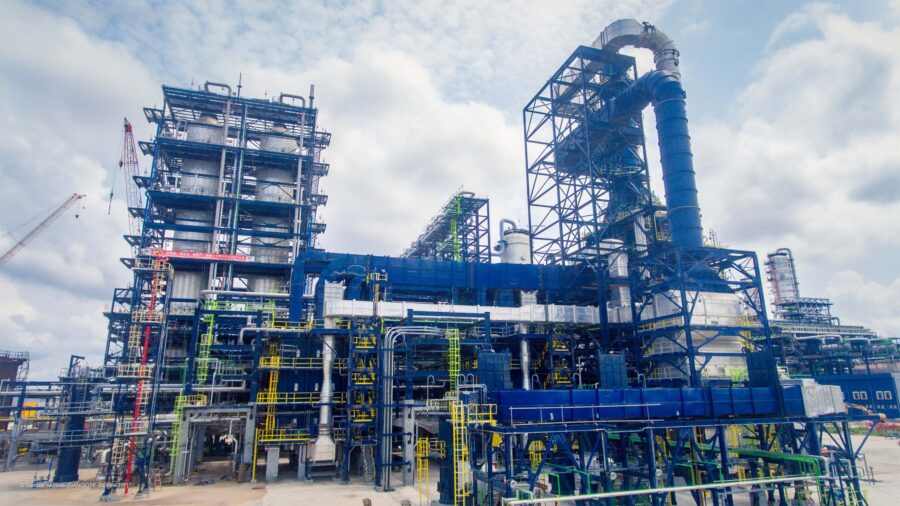
The S&P Global Commodity Insights says Dangote Petroleum Refinery has continued to cushion Nigerians from the impact of rising global fuel prices by maintaining stable domestic petroleum prices despite mounting international market pressures.
The market intelligence report said fuel importers supplying Nigeria are facing increasing challenges as international gasoline prices, freight costs and tightening global fuel supplies drive up import costs across West Africa.
S&P quoted market participants as saying that Dangote refinery’s pricing has effectively capped fuel prices in Nigeria, preventing importers from transferring higher international costs to local consumers.
A trader quoted in the report noted that while gasoline meeting Ghanaian specifications now attracts higher premiums, Nigerian specification cargoes remain less competitive because Dangote has kept its coastal sales prices unchanged despite rising global prices.
Another trader said fuel imports into Nigeria have become increasingly uneconomic, explaining that gasoline prices at the regional trading hub in Lomé now exceed Dangote Refinery’s sales prices, effectively eliminating profitable import opportunities.
S&P also reported that freight costs for transporting refined petroleum products from Northwest Europe to West Africa have increased significantly, rising from $29.70 per metric tonne at the end of June to $37.12 per metric tonne as shipping patterns shift to alternative markets.
The report further noted that reduced supplies of Russian Black Sea diesel have tightened regional fuel markets, pushing up diesel prices and increasing costs for importers.
Despite the challenging global environment, Dangote refinery said it has continued to lower local fuel prices.
Oil prices rise as Trump reimposes Iran blockade
Since the end of May, the refinery has reduced the ex-depot price of Premium Motor Spirit (PMS), otherwise known as petrol, by more than N200 per litre, Automotive Gas Oil (diesel) by N300 per litre, and Jet A1 aviation fuel by N520 per litre.
The refinery attributed its pricing policy to the actual cost of crude oil procurement, stating that crude is purchased weeks or months before refining under commercial contracts rather than being tied to daily fluctuations in international Brent crude prices.
Industry analysts said the latest market trends underscore the strategic importance of domestic refining in protecting Nigeria from external supply shocks.
They noted that without Dangote refinery’s production capacity, rising international fuel prices and shipping costs would likely have resulted in significantly higher pump prices for Nigerian consumers.
The report also highlighted Dangote refinery’s growing influence on petroleum pricing across West Africa, with market participants increasingly viewing its pricing as the regional benchmark.
Analysts said the refinery is helping to reduce Nigeria’s dependence on imported fuel, conserve foreign exchange and provide greater price stability as global energy markets remain volatile.

- Wike vows: Rainbow Coalition’ll deliver Rivers, FCT for Tinubu in 2027 - October 20, 2026
- ‘Drill or lose your assets’: NUPRC warns idle oil licence holders - October 20, 2026
- Ogun govt shuts steel company after worker’s death - October 20, 2026