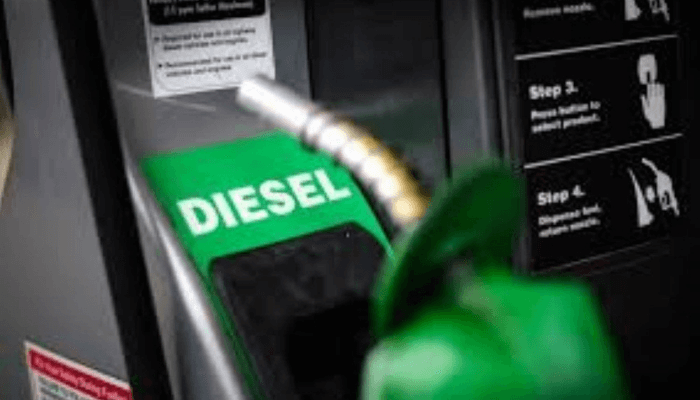
Manufacturers and bakers have raised the alarm over the soaring price of diesel, warning that the cost of the commodity, which has climbed to nearly N2,000 per litre in some parts of Nigeria, is threatening businesses, jobs and household incomes.
They said the sharp increase in diesel prices was eroding profit margins, raising production and transportation costs and could further drive up food prices as businesses struggle to absorb higher energy expenses.
The Crude Oil Refinery Owners Association of Nigeria also called for urgent intervention, saying the development was particularly troubling because diesel remained a major energy source for factories, farms, transport companies, telecommunications firms and other businesses.
In a statement by its Publicity Secretary, Eche Idoko, CORAN said sustained increases in diesel prices would further compound the difficulties facing manufacturers operating in Nigeria.
The association argued that expanding domestic refining was critical to reducing the country’s exposure to imported petroleum products and fluctuations in international markets.
CORAN said Nigerian modular refineries, with an estimated combined installed capacity of about 35,000 barrels per day, could produce between 2.2 million and 2.8 million litres of diesel daily if they operated at full capacity.
It added that the Dangote Petroleum Refinery reportedly produced about 19.1 million litres of diesel per day in July.
With both sources operating at their potential, domestic diesel production could rise to between 21 million and 22 million litres daily, compared with reported national consumption of about 14.7 million litres per day in July.
Despite this potential, Nigeria imported about 244.9 million litres of diesel in July, according to CORAN.
The association said the figures showed that the country needed to urgently address barriers preventing local refineries from operating at full capacity.
It called on the Presidential Committee on Naira-for-Crude to guarantee adequate crude supplies to the Dangote refinery and extend the naira-for-crude arrangement to modular refineries.
CORAN also urged the Federal Government to develop commercially viable crude supply arrangements that would enable domestic refineries to maximise their production capacity.
For businesses already grappling with high operating costs, however, the impact of expensive diesel is immediate.
President of the Premium Bakers’ Association of Nigeria, Emmanuel Onuorah, said the surge in diesel prices had made it increasingly difficult for manufacturers, particularly bakeries, to remain profitable.
“The situation is crazy,” Onuorah said, noting that diesel, which sold for about N800 per litre around the same period last year, now costs between N1,800 and N1,900 depending on the location and source.
He said the increase had effectively pushed one of the major components of production costs up by as much as 150 per cent.
“For us, we don’t even want to look. I don’t even look at the books again. I just produce and sell. I’m not thinking of profitability; I’m thinking of, let us just remain afloat in the bakery,” he said.
Onuorah said any relief from relatively stable flour prices had been wiped out by the rising cost of electricity, frequent power outages, investment in alternative energy sources and diesel.
“It’s a terrible situation we are finding ourselves in. I don’t even mind. I just pity every manufacturer in Nigeria, no matter what you are producing,” he said.
He warned that the consequences were not limited to businesses, arguing that rising energy and transportation costs were also putting additional pressure on workers and households.
According to him, workers are increasingly spending more of their fixed incomes on transportation while also contending with rising food prices, rent, school fees and other living expenses.
He said the cost of fuelling vehicles had risen to the point where money that previously covered a week’s fuel could now buy substantially less.
“A worker that has a fixed income and needs to go to work, the man wants to buy bread, he wants to buy a meal, he wants to pay school fees, he wants to pay inflated rent. How can that man survive?” he asked.
Onuorah also expressed concern that employers facing escalating production costs might have limited capacity to increase workers’ wages, leaving employees squeezed between stagnant incomes and rising living expenses.
He further warned that renewed volatility in the global oil market, particularly any disruption arising from tensions in the Middle East, could put additional pressure on energy prices and deepen the challenges confronting Nigerian businesses.
The manufacturers’ concerns come as calls intensify for greater domestic refining and more reliable energy supply to reduce production costs and ease pressure on businesses and consumers.

- Nigerian oil tycoon Indimi loses $60m on Jaiz Bank shares - October 26, 2026
- Nigeria could be declared Ebola-free on December 7 — Minister - October 26, 2026
- NUPRC plans crude swap to cut refinery costs by $4 per barrel - October 26, 2026