

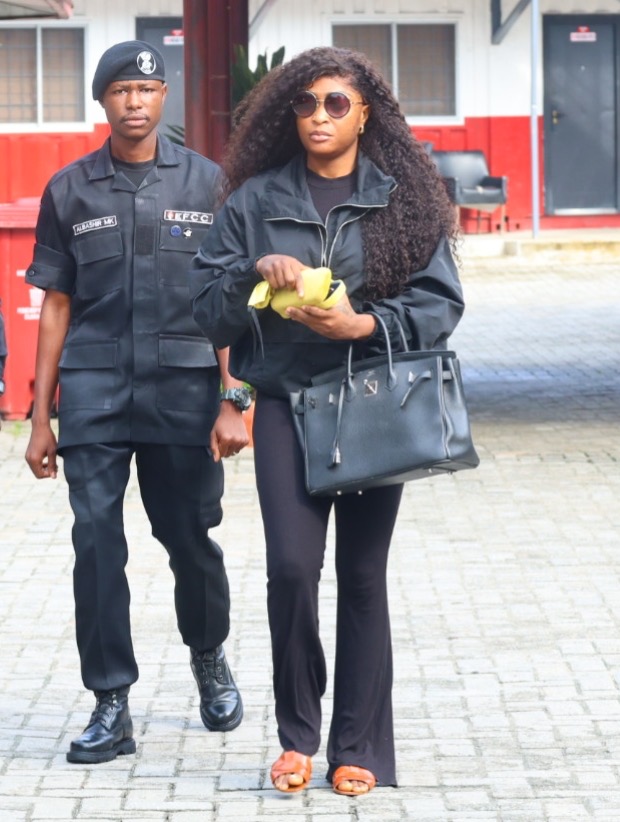
The Economic and Financial Crimes Commission has arraigned popular social media influencer, Okoro Blessing Nkiruka, before the Federal High Court in Lagos over an alleged N13 million fraud involving a purported cancer diagnosis.
Blessing CEO was arraigned on Wednesday before Justice Yelim Bogoro of the Federal High Court sitting in Ikoyi, Lagos, on a six-count charge bordering on obtaining money by false pretence, forgery and retention of proceeds of crime.
According to the EFCC, the charges followed petitions submitted by several individuals and organisations, including the Nigeria Cancer Society, alleging that the influencer solicited donations from the public after claiming on social media that she was battling Stage 4 breast cancer and required financial assistance for treatment.
The anti-graft agency alleged that investigations later revealed that the medical documents she presented to support the claim were falsified.
One of the charges alleged that Blessing CEO obtained N13 million from members of the public by falsely claiming she had been diagnosed with a terminal illness, including invasive ductal carcinoma with lobular features, an assertion prosecutors said she knew to be false.
Another count accused her of knowingly forging a medical report titled “Histopathology/Cytopathology Report,” purportedly issued by Xinus Medical Diagnostics, with the intention of gaining financial advantage from unsuspecting donors.
When the charges were read in court, the defendant pleaded not guilty.
Following her plea, the prosecution counsel, H.U. KofarNaisa, requested a trial date and urged the court to remand her in a correctional facility pending trial.
Counsel to the defendant, Stanley Ofoegbu, asked the court for a short adjournment to enable him file a bail application on her behalf.
Justice Bogoro subsequently adjourned the case until September 24, 2026, for the commencement of trial and ordered that the defendant be remanded in a correctional centre pending further proceedings.
The allegations remain subject to determination by the court, and the defendant is presumed innocent until proven guilty.

- INEC confirms Yahaya Bello as APC Kogi Central candidate - September 12, 2026
- FULL LIST: INEC releases final list of 18 presidential candidates for 2027 - September 12, 2026
- Uganda’s former youngest king buried amid family feud - September 12, 2026