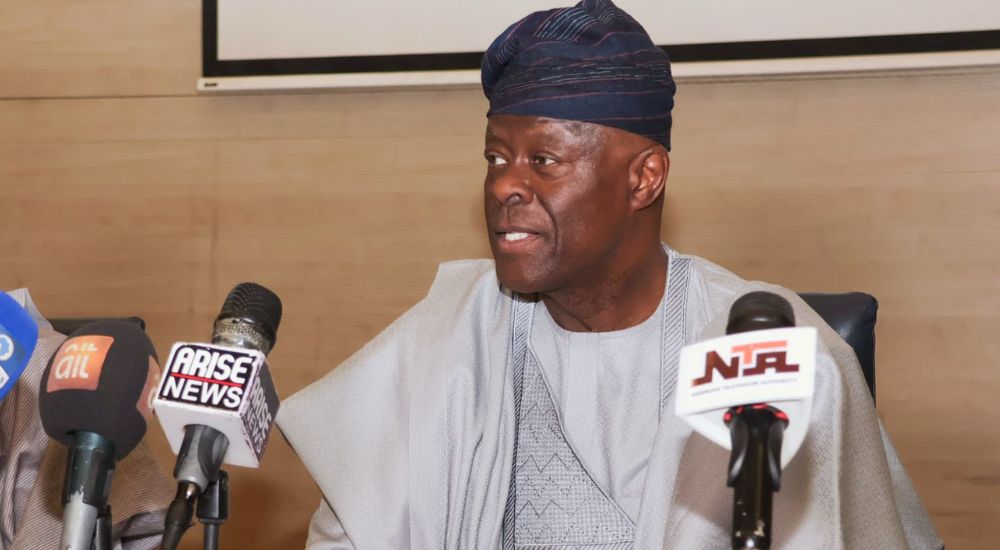
Nigeria’s Minister of Finance and Coordinating Minister of the Economy, Wale Edun, has cautioned that aggressive interest rate increases could undermine economic reforms in developing countries, warning policymakers to tread carefully amid escalating global pressures.
Edun made the remarks at a G24 press conference on the sidelines of the International Monetary Fund spring meetings in Washington, D.C.
“Premature or excessive interest rate hikes could undermine ongoing economic reforms, while delayed policy responses risk fuelling inflation,” he said, urging central banks to strike a careful balance between taming inflation and sustaining reform momentum.
The minister acknowledged that oil-exporting nations like Nigeria could benefit from elevated crude prices but stressed that rising costs of gas, fertiliser and food still exposed such countries to significant domestic pressures. Oil-importing nations, he added, faced the compounded burden of swelling import bills.
Edun urged governments to deploy fiscal buffers and provide targeted, temporary relief for vulnerable populations rather than rolling back structural reforms. He specifically cautioned against reinstating fuel subsidies, maintaining that Nigeria’s removal of fuel subsidies and liberalisation of the foreign exchange market had strengthened the country’s economic foundation despite external headwinds.
On debt, the minister painted a stark picture for developing nations, noting that debt servicing obligations had now outpaced inflows from aid and investment in many countries, severely narrowing fiscal space. He called on multilateral institutions to scale up liquidity support and policy guidance, while also advocating concessional financing and innovative risk management tools to ease borrowing pressures.
Edun further championed stronger domestic resource mobilisation through improved tax systems and deeper private sector engagement, describing both as more sustainable routes to economic stability. He said technology, including artificial intelligence, could boost revenue collection and improve tax-to-GDP ratios through automation and digitalisation, even as he acknowledged that AI risked widening inequality in the short term.
The minister also raised concern over slowing global trade, attributing it to supply chain disruptions and economic fragmentation that were driving countries towards domestic production and regional trade integration.
Also speaking at the event, Director of the G-24 Secretariat, Iyabo Masha, urged central banks to take a cautious, data-driven approach to monetary policy, noting that supply-side constraints in oil production respond weakly to rate adjustments. She called on multilateral institutions to intensify support for debt-stressed countries and reaffirmed the importance of a rules-based global trading system.
The remarks come as Nigeria’s central bank eases its earlier tightening stance. The Central Bank of Nigeria cut its Monetary Policy Rate by 50 basis points to 26.5 per cent at its 304th Monetary Policy Committee meeting in February, citing a significant moderation in price pressures after months of aggressive rate increases.
The rate cut has begun to show early results. CBN data shows that credit to the private sector rose by N380.85bn in February 2026, climbing from N75.24tn in January to N75.62tn the following month.

- Kebbi gov dissolves electoral commission board - September 8, 2026
- Radda presents N828.6bn 2027 budget to Katsina Assembly - September 8, 2026
- I came to mourn, not campaign — Obi on Benue visit - September 8, 2026