
The Federal Government has set a target of raising electricity access above 80 per cent within five years while closing the gap between installed and available generation capacity within three years.
The Minister of Power, Joseph Tegbe, disclosed this during a presentation on “Industrialisation and Regional Competitiveness: The Role of Power” at the Nigeria Economic Summit Group event in Lagos.
Tegbe said the government would also work with the Nigerian Electricity Regulatory Commission to reduce Aggregate Technical, Commercial and Collection (ATC&C) losses to below 17 per cent within three years.
According to him, the targets are part of efforts to address Nigeria’s persistent power challenges, which have increased production costs and weakened the competitiveness of manufacturers.
“Over 80 per cent access, ATC&C losses below 17 per cent, the capacity gap closed – Nigerian industry gets the reliable, affordable power it needs to compete for AfCFTA’s 1.4 billion consumers,” he said.
The minister said improving electricity supply was critical to President Bola Tinubu’s ambition of transforming Nigeria into a $1 trillion economy.
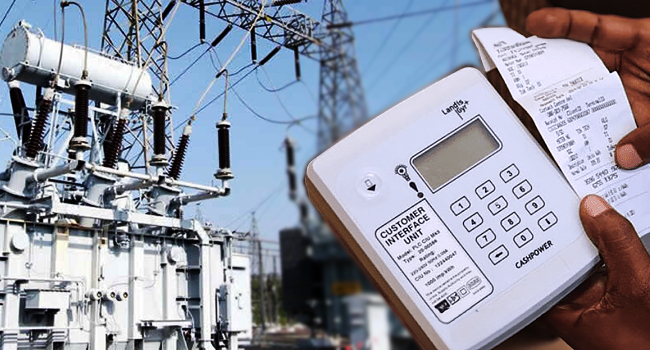
He added that the government had begun strengthening key transmission corridors, including Lagos, Enugu-Port Harcourt and Abuja-Kaduna-Kano, while seven million electricity meters were being rolled out and training had commenced for 5,000 people.
“The plan is in motion: transmission corridors through Lagos, Enugu–Port Harcourt and Abuja–Kaduna–Kano are being strengthened, seven million meters are rolling out, training of 5,000 recently commenced, and captive economic clusters are linking power directly to industry,” Tegbe said.
The ministry also plans to establish an independent electricity market with reduced government intervention, improve liquidity in the sector and tackle recurring debts and operational losses.
The government identified the electricity supply gap as one of the major obstacles to industrialisation, noting that Nigeria currently has 13,625 megawatts of installed grid capacity but only about 4,854MW is available on average daily.
This means a significant portion of installed capacity remains unavailable, while realistic peak electricity demand is estimated at about 20,000MW.
The ministry said unreliable grid supply had forced businesses to depend heavily on alternative sources of electricity, imposing substantial additional costs on manufacturers.
It cited estimates showing that Nigerians spent N16.5 trillion on self-generation in 2023, compared with about N1 trillion in grid revenue.
The World Bank has also estimated that unreliable electricity supply costs Nigeria about $25 billion annually, equivalent to between five and seven per cent of the country’s Gross Domestic Product.
The ministry said improved grid stability, expanded transmission infrastructure and the development of economic clusters would help unlock industrial productivity and attract investment.
However, the Director of Research and Economic Policy Division at the Manufacturers Association of Nigeria, Dr Oluwasegun Osidipe, said inadequate energy supply remained the biggest constraint facing manufacturers.
Speaking on a panel at the summit, Osidipe cited MAN’s Q2 2026 Manufacturers’ CEO Confidence Index, which identified inadequate energy supply as the leading challenge affecting manufacturers.
He said manufacturers had invested heavily in alternative power generation because of unreliable grid electricity, further increasing their operating costs.
Beyond electricity, Osidipe identified regulatory bottlenecks, exchange-rate pressures, dependence on imported machinery and raw materials, and poor coordination between monetary and fiscal policies as other major constraints to industrial competitiveness.
He said manufacturers were also forced to spend significant time and resources dealing with multiple regulatory agencies and overlapping requirements.
According to him, reducing energy costs and addressing regulatory and policy inconsistencies would be critical if Nigerian manufacturers are to compete effectively in the domestic market and across the African Continental Free Trade Area.

- FG targets 80% electricity access, lower power losses in five years - August 22, 2026
- Alake demands safer mines after 100-plus miners die in CAR - August 22, 2026
- Northern senators demand immediate action on state police - August 22, 2026