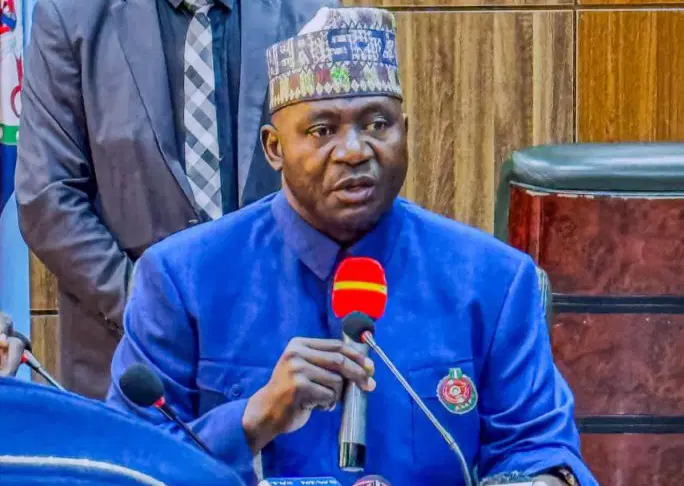
The military can free abducted victims without killing or arresting their captors by cutting off the terrorists’ escape routes and supplies, Defence Minister Christopher Musa has explained.
Musa said the strategy relies on intelligence, tactical manoeuvres and isolating terrorists from essentials such as food, water and fuel, forcing them to abandon their captives when security forces close in.
The retired general made the disclosure on Channels Television’s Politics Today on Thursday while responding to questions about recent military operations in which kidnapped victims were rescued without the reported payment of ransom or the deaths of their captors.
According to him, terrorists often flee once they detect an approaching security operation, particularly when confronted by military aircraft or drones, leaving the hostages behind.
“Sometimes if you carry out manoeuvres. The funny thing is, the terrorists too don’t want to die. I hope you know that,” Musa said.
He explained that once troops establish the location of a terrorist group, they work to seal off routes through which the criminals could escape or receive supplies.
Musa said sustained disruption of their access to basic necessities could significantly weaken their ability to remain in their hideouts.
He also pointed to the role of individuals who secretly supply terrorists with food, water and fuel, saying such support enables the groups to continue operating.
The minister further disclosed that ransom payments could provide investigators with financial trails that may help security agencies identify criminal networks.
He said the Central Bank of Nigeria was working to trace suspicious funds and establish where money linked to criminal activities originates and goes.
“I’m happy that the CBN too is living up to expectation, trying to make sure that even if we were able to trace monies that are coming in from those other areas, we can track back where they are,” he said.
Musa also appealed to state governors to reconsider the practice of distributing motorcycles as palliatives, warning that some of the vehicles could eventually fall into the hands of terrorists and bandits.
According to him, motorcycles give criminal groups the speed and mobility required to penetrate communities, carry out attacks and quickly escape security operations.
“We try to appeal to even governors to stop selling motorcycle—giving motorcycles out as palliatives,” he said, adding that where such assistance is necessary, smaller-capacity motorcycles should be considered because they would offer less mobility to criminals.
The minister similarly raised concerns that motorcycles distributed through constituency projects and other government programmes could be diverted to bandit groups.
Musa’s comments come amid continued efforts by security agencies to combat kidnapping and other forms of violent crime across the country, particularly in areas affected by terrorist and bandit activities.

- Okoya’s estranged son still gets four flats, medical aid — Family - October 23, 2026
- Niger woman arraigned for cutting husband’s manhood - October 23, 2026
- NAFDAC uncovers fake alcohol supply hub in Lagos - October 23, 2026