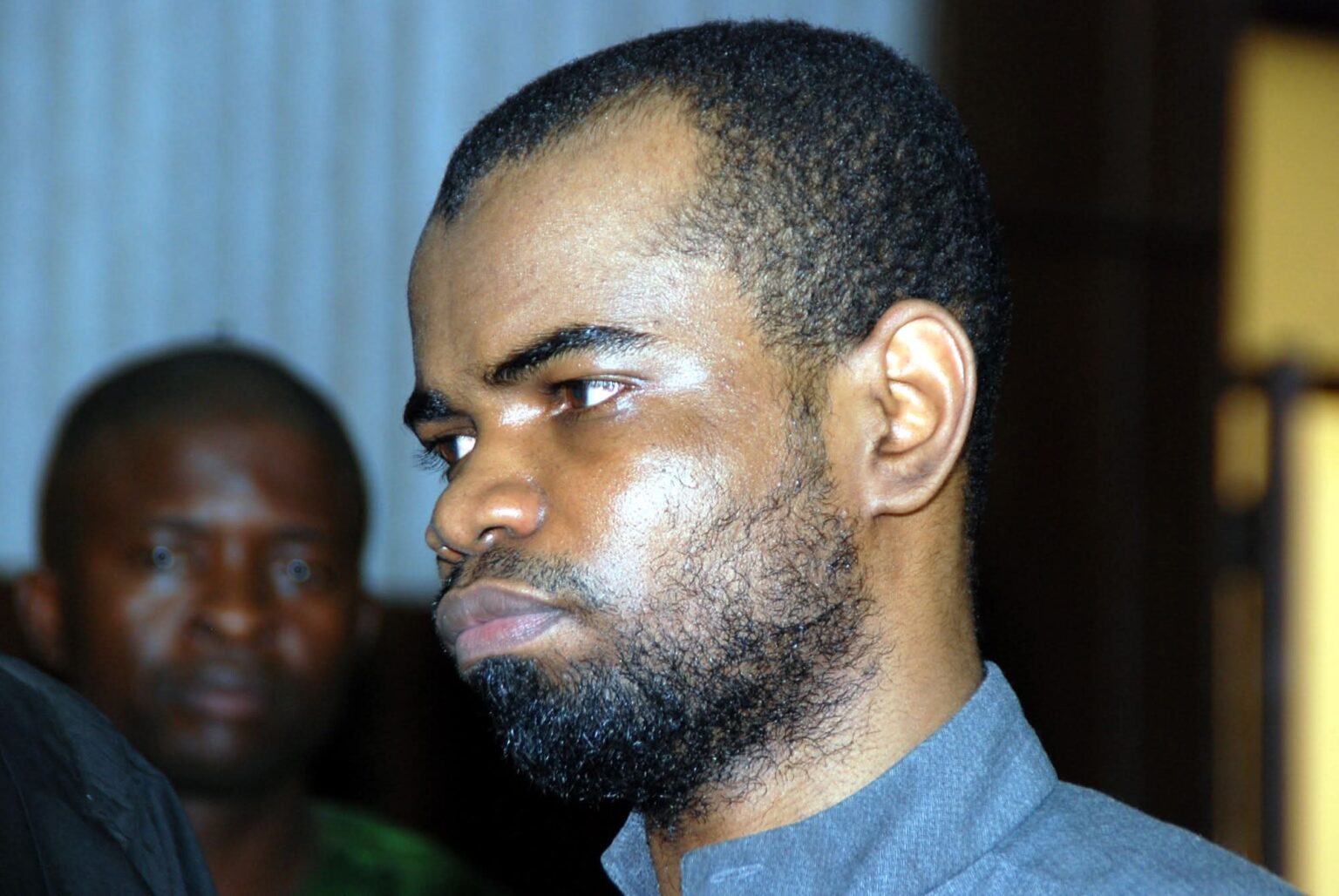
Kabiru Umar Sokoto, a convicted Boko Haram member, has filed an appeal challenging his terrorism conviction at the Court of Appeal in Abuja, arguing that his trial and sentencing were wrongful and should be overturned.
Through his legal representatives, Don Akaegbu & Company, Sokoto submitted an application dated May 13, 2026, seeking leave to file his notice of appeal out of time. He also asked the court to treat the already filed notice as properly filed and served.
Sokoto was convicted on December 20, 2013, by the Federal High Court in Abuja and sentenced to life imprisonment for his role in the Christmas Day bombing of St. Theresa Catholic Church in Madalla, Niger State, an attack that killed at least 37 people and injured 57 others.
He was previously linked to other alleged terrorism-related activities, including a reported plot to kidnap children of then Borno State Governor Kashim Shettima, according to earlier reports.
He was first arrested in 2012 at the Borno Governor’s Lodge in Asokoro, Abuja, later escaped police custody, and was re-arrested in Taraba State a month later.
In his motion, Sokoto’s counsel argued that the delay in filing the appeal was not intentional but caused by prolonged incarceration, repeated transfers between custodial facilities, and the death of two lawyers handling the case.
According to the filing, Sokoto has remained in custody since his conviction and was moved across several prisons, making it difficult to maintain consistent legal representation and complete the appeal process within the required 90-day period.
In an affidavit, Lawal Suleiman, a nephew of the convict, stated that Sokoto is currently held at the Kirikiri Maximum Security Custodial Facility in Lagos State. He claimed that the family had difficulty locating him during a visit in March 2026 and raised concerns about his health and prolonged detention.
The affidavit also stated that Sokoto’s condition had deteriorated over the years and that he remained responsible for supporting his family, who have allegedly struggled in his absence.
In his proposed appeal, Sokoto is seeking to have his conviction set aside and to be discharged and acquitted on two counts filed against him by the federal government.
He argued that the trial court erred in law by convicting him under provisions of the Economic and Financial Crimes Commission (Establishment) Act, 2004, which he claims relate to financial crimes rather than terrorism-related offences.
He also contended that the prosecution failed to establish a direct link between him and specific terrorist acts alleged to have occurred in Mabira, Sokoto State, between 2007 and 2012.
Sokoto maintains that the prosecution did not prove its case beyond reasonable doubt and is asking the appellate court to overturn the conviction in its entirety.

- South African great-grandmother jailed for 20 years over deaths of three children - October 10, 2026
- 2027: NDC to inaugurate Obi-Kwankwaso campaign council October 20 - October 10, 2026
- UK universities withdraw Nigerians’ admission offers as visa refusals surge - October 10, 2026