


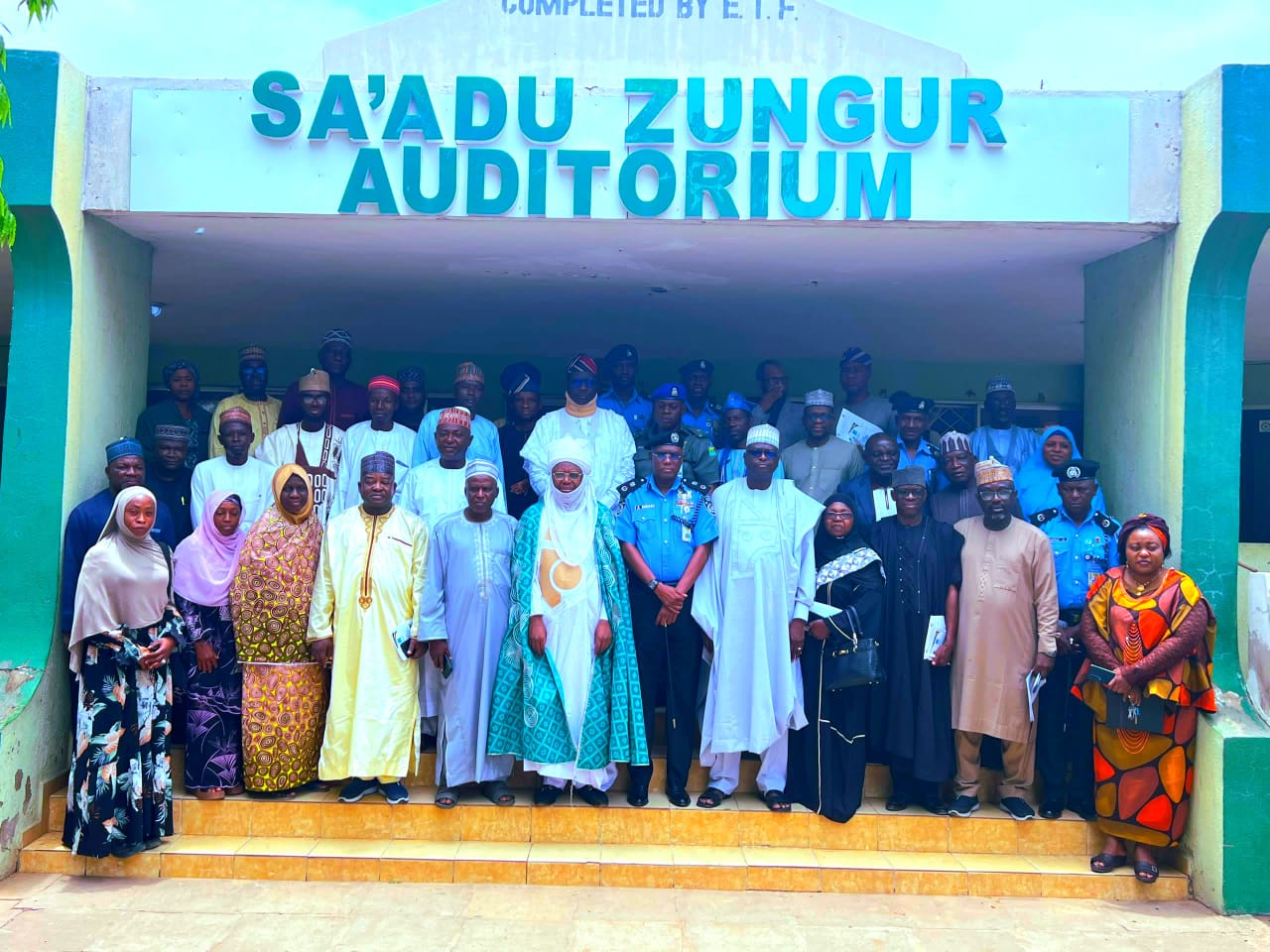
Stakeholders in Nigeria’s electoral process have called for stronger collaboration among security agencies, the Independent National Electoral Commission (INEC), civil society organisations, traditional institutions, the media and other relevant actors to prevent violence and promote credible elections in 2027.
The stakeholders made the call on Thursday at a one-day engagement on “Strengthening Electoral Engagement for Peaceful 2027 General Elections in Nigeria,” organised by the Aminu Kano Centre for Democratic Studies, Bayero University, Kano, in partnership with Al-Habibiyyah Islamic Society, Abuja.
The engagement, held at the Sa’adu Zungur Auditorium, Mambayya House, Kano, brought together representatives of key institutions to assess potential threats to the 2027 elections and develop practical strategies for peaceful political participation.

Participants included the Executive Director of the Centre for Information Technology and Development, Y.Z. Ya’u; the Resident Electoral Commissioner of INEC in Kano, Abdulsamad Abdu Zango; Kano State Commissioner of Police, Ibrahim Adamu Bakori; Acting Zonal Director of the Economic and Financial Crimes Commission, Kano Zonal Directorate, Friday Ebelo; FIDA Kano Chairperson, Salma Dan Bappa; Bayero University lecturers Saidu Ahmad Dukawa and Prof. Samaila Sulaiman; and Elizabeth Waziri of the Nigerian Television Authority, Kano.
The Director of Mambayya House, Prof. Habu Muhammad Fagge, said the forum was aimed at bringing together institutions and individuals whose responsibilities were directly linked to Nigeria’s democratic development.
He said the engagement provided an opportunity for security agencies, civil society organisations, traditional institutions and other stakeholders to exchange ideas on strengthening the electoral process and preventing violence.
Fagge acknowledged that similar interventions had been held previously but said persistent electoral challenges made continuous engagement necessary.
He urged stakeholders to learn from the shortcomings of previous elections and use the lessons to improve future electoral processes.
“The meeting is aimed at ensuring that our negative past has now been turned to a positive future. That is precisely why we are here,” he said.
Representing the Executive Director of Al-Habibiyyah Islamic Society, Imam Fuad Adeyemi, Alhaji Abdul-Qarni Abdulrazak said the organisation had maintained a partnership with Mambayya House for more than two decades through programmes focused on youth development, elections and anti-corruption.
Abdulrazak stressed the need for early preparation, saying elections should be viewed as a continuous process rather than an event restricted to election day.
“Election is not a one-day programme. Even though the vote will be one day, it is a process. And if we did not start the process in time, we may have a shambles election,” he said.
He urged Nigerians across religious, age and social groups to take ownership of the electoral process and participate actively in choosing their leaders.
“For a peaceful election, there must be engagement between all the stakeholders so that we can have a peaceful, transparent and credible election in Nigeria,” he added.
The Kano State Commissioner of Police, CP Ibrahim Adamu Bakori, described the engagement as timely, particularly as political activities are expected to intensify ahead of the 2027 elections.
Bakori said no single institution could guarantee peaceful and credible elections, stressing the importance of cooperation among security agencies, INEC, academics, traditional institutions, civil society organisations and other stakeholders.
“It’s very important and vital, at least, to have this kind of gathering of like minds—academicians, the security agencies, the electoral body INEC, as well as the traditional institutions,” he said.
The commissioner assured that the police would focus on maintaining law and order and creating an environment where citizens could exercise their civic rights without intimidation or threats.
“The police will maintain law and order and make sure that everybody exercises their civic duties and responsibilities without having any threats,” Bakori said.
The stakeholders agreed that early preparation, sustained dialogue, citizen participation and stronger coordination among institutions would be crucial to preventing electoral violence, strengthening public confidence and ensuring peaceful participation in the 2027 general elections.

- Nigerian researcher wins $100,000 award for male fertility study in Canada - October 1, 2026
- Troops rescue NYSC members after Imo road abduction - October 1, 2026
- Patient dies after ambulance stopped for governor’s convoy in India - October 1, 2026