

Organised labour says the process for renegotiating the national minimum wage will commence in July 2026.
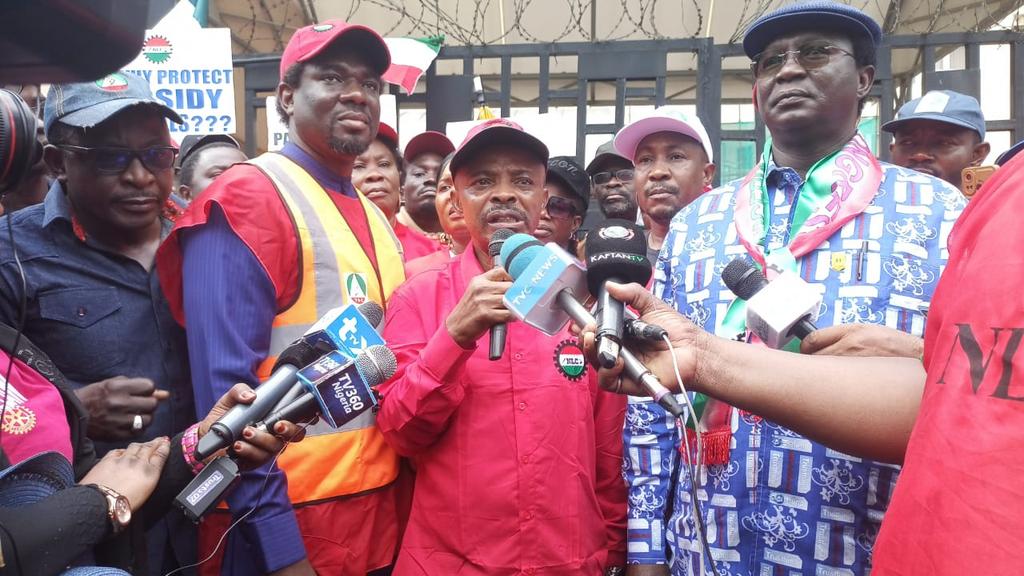
The Nigeria Labour Congress (NLC) and the Trade Union Congress (TUC) made this known at the 2026 International Workers’ Day in Abuja on Friday, May 1, 2026.
The NLC President, Joe Ajaero, said the move was aimed at preventing delays experienced during previous wage negotiations.
Ajaero urged workers to unite in demanding a living wage that reflected prevailing economic realities across the country.
The NLC president demanded that workers received 100 per cent of their basic salaries from July 2026 pending conclusion of negotiations.
He added that the demand was to cushion the effects of the current economic hardship facing Nigerian workers.
Ajaero also reaffirmed the NLC’s commitment to defending workers’ rights and advancing their welfare nationwide.
Ajaero said Nigerian workers must remain united in confronting challenges affecting their livelihoods and dignity.
He added that unity remained essential as negotiations approach, noting that fragmentation would weaken workers’ bargaining power at a critical moment.
Also speaking, the TUC President, Festus Osifo, said there was need for strengthened social dialogue platforms, including revitalisation of the National Labour Consultative Council.
Uba Sani reaffirms commitment to workers’ welfare
He said labour administration reforms are also necessary to ensure fairer and more effective industrial relations in Nigeria.
Osifo warned against continued violations of labour laws by some employers and urged strict enforcement of existing regulations.
He expressed concern over refusal by some state governments to fully implement the 2024 National Minimum Wage Act.
The TUC boss stated that such actions undermined workers’ welfare in spite of improved government revenues in several states.
Osifo called for accountability and compliance from both public and private sector employers.
He also reaffirmed the union’s readiness to intensify engagement with employers to protect workers’ rights across all sectors.

- MLS: Messi scores as Toronto defeat Inter Miami at home - August 23, 2026
- Obi Cubana gifts Pastor Jerry Eze new house to mark 44th birthday - August 23, 2026
- NGX investors trade N157.7bn shares as market cap drops to N154.5trn in one week - August 23, 2026