

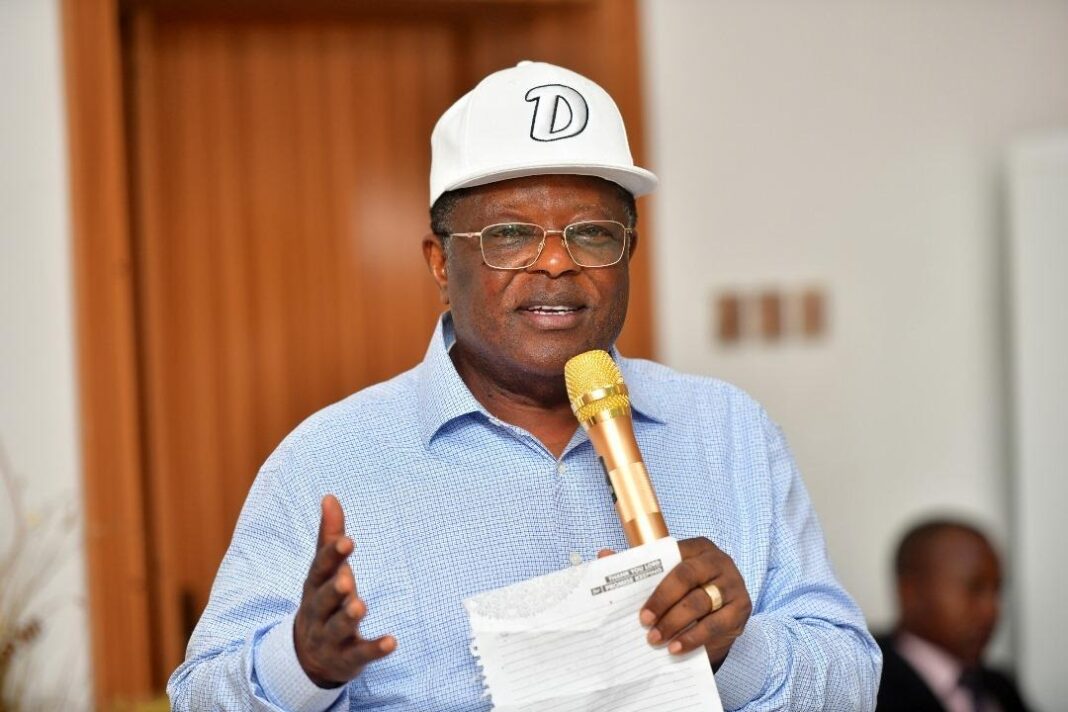
The Federal Government has no single comprehensive engineering design for the 750-kilometre Lagos-Calabar Coastal Highway, more than two years after construction began, Minister of Works David Umahi has disclosed.
Umahi said the project was being designed and costed in separate sections, raising questions about how the government would establish the highway’s overall cost and assess its financial requirements.
The minister made the disclosure during an interview on Arise Television on Friday, while defending the cost of the highway, one of President Bola Tinubu’s flagship infrastructure projects.
Asked whether a comprehensive engineering design existed for the entire route, Umahi said, “There is no one single design that the 750 kilometres of Lagos-Calabar Coastal Highway is holding. There’s no one single design.”
2027: Peter Obi no threat to Tinubu’s re-election — Umahi
He explained that engineering designs were developed for individual sections after environmental assessments and soil investigations determined the terrain, route and technical requirements.
According to him, the ministry’s archives contained no complete engineering design, subsoil investigation or other detailed technical documents covering the entire highway, which he said had been conceived in 1955 and gazetted in 2006.
“There is no single design of any road project that came out, you know, in reality, at the end of the project, the way it was designed,” he said.
Umahi added that the Federal Executive Council-approved procurement arrangement required the highway to be procured section by section, arguing that this made it inappropriate to calculate the total cost by multiplying an estimated average rate by the entire 750 kilometres.
“Who fixed this N15tn that people are just, you know, brandishing everywhere? Who fixed it? And let me also clarify that nobody has the right to do an average cost and multiply by 750,” he said.
The disclosure comes amid persistent questions about the highway’s total cost, construction process, environmental approvals and the government’s capacity to complete the project.
Defending the cost of the first section, Umahi estimated that a standard two-lane carriageway would cost about $5.5m per kilometre, equivalent to approximately N7.3bn at an exchange rate of N1,330 to the dollar.
He based the estimate partly on a comparison with a coastal road project in neighbouring Benin Republic.
The minister cited a 47.47-kilometre coastal road in Benin, which he said cost N1.06tn, and put the cost of a three-carriageway configuration at about N7.5bn per kilometre before adjusting the figure for a standard two-lane carriageway.
However, Umahi cautioned against using the estimate to calculate the cost of the entire Lagos-Calabar highway, arguing that construction costs would vary depending on the terrain, bridges and engineering requirements of individual sections.
The absence of a single comprehensive design and an established overall project cost raises questions about how the government will determine the highway’s total financial commitment, evaluate its value for money and communicate the expected completion cost to Nigerians.

- FG to end disputes delaying Zaria rail extension - October 25, 2026
- Lagos-Calabar highway lacks overall engineering design — Umahi - October 25, 2026
- Nurses issue 21-day ultimatum over unsafe conditions in Ogun hospital - October 25, 2026