

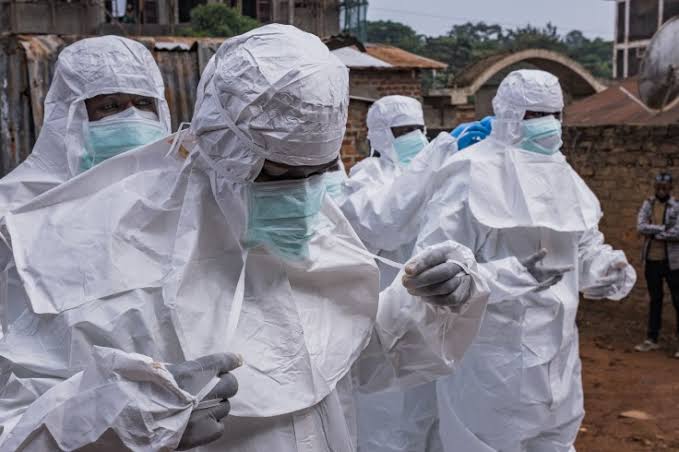
The Nigeria Centre for Disease Control and Prevention (NCDC) says two suspected Ebola Virus Disease cases identified in Yola, the capital of Adamawa State, have tested negative following two rounds of laboratory testing.
The NCDC Director-General, Dr Jide Idris, disclosed this in a statement on Saturday, October 31, 2026, saying the agency was working with the Adamawa State Government to investigate the reported cases.
Idris said the report was received by the Adamawa Public Health Emergency Operations Centre in the early hours of Friday, October 30, following the identification of two individuals with symptoms suggestive of Ebola.
Idris noted that the individuals were immediately isolated, while samples were collected and appropriate public health measures initiated to determine the cause of their illnesses.
The NCDC boss said laboratory results from two rounds of testing were negative for Ebola, confirming that there was currently no laboratory-confirmed case in Adamawa State.
He commended the Adamawa State Commissioner for Health and his team for their proactive response, assuring that the NCDC would continue to provide technical support to strengthen the state’s response operations.
Idris also clarified that the previously confirmed case in the Federal Capital Territory (FCT) remained Nigeria’s only laboratory-confirmed Ebola case.
He urged Nigerians to remain calm and avoid spreading unverified information or speculation, advising the public to rely on official government and public health communication channels.
Nigeria records 2 suspected Ebola cases in North-East
The NCDC boss described Ebola as a serious infectious disease requiring prompt detection, appropriate clinical management and effective infection prevention and control measures.
Idris advised anyone experiencing symptoms such as fever, severe weakness, headache, muscle pain, vomiting, diarrhoea or unexplained bleeding to seek immediate medical attention.
Idris stressed that people experiencing such symptoms, particularly after possible exposure, should inform healthcare workers about relevant travel or contact history.
He also warned against self-medication, urging individuals to follow professional medical advice and guidance from public health authorities.

- FBI: North Korea behind $6bn Binance crypto theft - November 1, 2026
- Barcelona thrash Alaves 6-1 to retain LaLiga top spot - November 1, 2026
- NCDC confirms negative Ebola tests in 2 suspected cases - November 1, 2026