

Vice President Kashim Shettima says Nigeria’s sanitation economy could grow to $14.23 billion by 2030 with innovation, stronger partnerships, and increased private-sector investment.
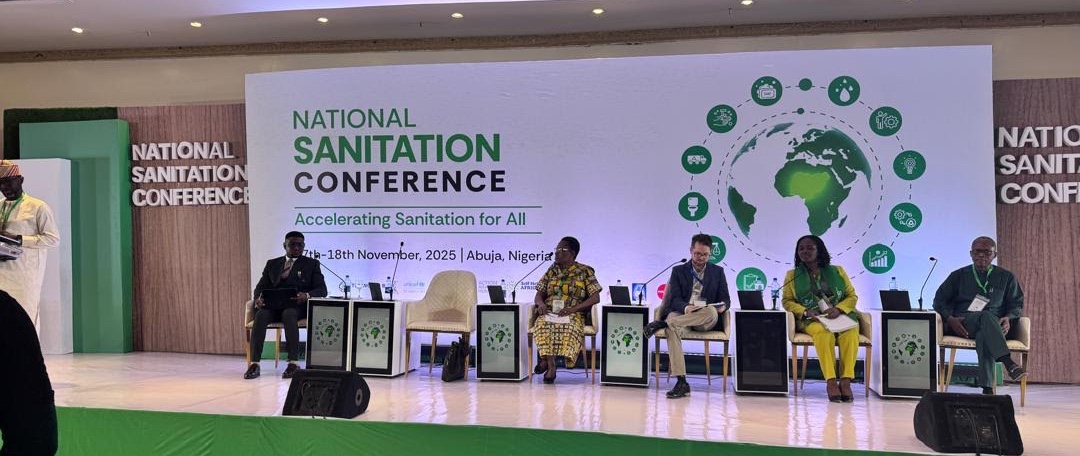
Speaking at the 2025 National Sanitation Conference in Abuja—represented by the Senior Special Assistant to the President on Humanitarian Affairs, Inna Binta Audu—Shettima said the Federal Government is committed to expanding access to safe sanitation.
He described the conference as timely, noting that millions of Nigerians still lack safely managed sanitation services despite its importance to public health and national development.
He warned that rising open defecation continues to contaminate water sources, endanger communities, and reduce productivity, citing World Bank estimates that Nigeria loses $3 billion annually to poor sanitation.
Shettima highlighted ongoing government interventions under the WASH programme, including the National Action Plan, P-WASH, School and Health WASH, SOAR-WASH, and the Clean Nigeria: Use the Toilet Campaign. He announced that 158 LGAs have now achieved Open-Defecation-Free (ODF) status, while Katsina has joined Jigawa as the second state with full ODF certification.
He reaffirmed President Bola Tinubu’s commitment to prioritising WASH, saying the establishment of the Federal Ministry of Water Resources and Sanitation underscores this focus.
Shettima called on states and LGs to domesticate national sanitation policies and invest in community-led solutions, urging the private sector to explore opportunities in waste-to-wealth ventures, sanitation marketing, and green technologies.
The Vice President also underscored the need for behavioural change, stressing that sanitation progress depends on societal responsibility as much as infrastructure.
He reiterated Nigeria’s commitment to achieving SDG 6.2 by 2030.
Earlier, Minister of Water Resources and Sanitation, Prof. Terlumun Utsev, described sanitation as a driver of national prosperity, while Nigeria’s WASH Ambassador, Ebele Okeke, emphasised its importance to human dignity and health, especially for women, children, and vulnerable groups.

- Troops dismiss reports of ISWAP enclave in Borno’s Tuba - March 11, 2026
- PDP BoT seeks peace in party, declares ‘enough of litigations’ - March 11, 2026
- Hisbah arrests teens over plan for ‘gay’ party after Eid celebration - March 11, 2026