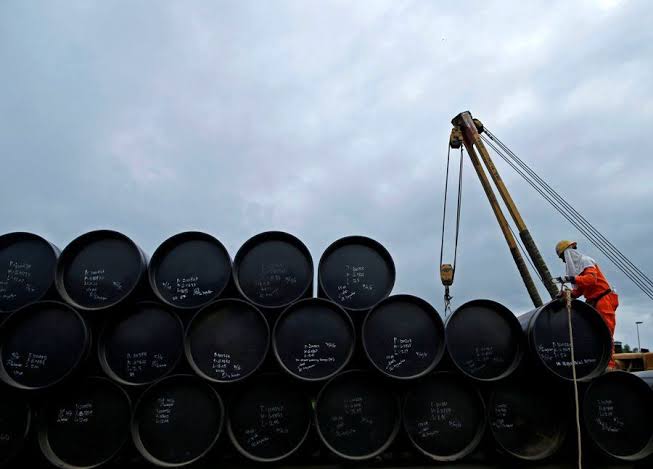
Nigeria generated nearly N1tn from exports of petrol in the first half of 2026, marking a sharp reversal for a product that had previously ranked among the country’s biggest import expenses.
Data from the National Bureau of Statistics showed that Nigeria earned N998.50bn from exports of Premium Motor Spirit, also known as petrol, during the first six months of the year.
The development reflects growing domestic refining capacity, particularly the ramp-up of the Dangote Petroleum Refinery, alongside disruptions to international fuel supply caused by the war involving Iran.
Of the total earnings, N621.72bn came from exports to African trading partners, according to the NBS trade statistics.
Petrol generated N546.02bn in the second quarter alone, accounting for 2.02 per cent of Nigeria’s total exports and placing it seventh among the country’s leading export commodities.
Crude oil remained Nigeria’s largest export in the quarter at N12.91tn, followed by kerosene-type jet fuel at N2.94tn, natural gas at N2.82tn, urea at N2.12tn, other petroleum gases at N1.89tn and gas oil at N1.32tn.
The scale of the change becomes clearer when compared with the same period in 2025.
Petrol was not among Nigeria’s leading exports in the first quarter of 2025. Instead, the country spent N1.76tn importing the product.
By the second quarter of 2025, petrol had appeared among the major exports with receipts of N85.83bn. The N546.02bn recorded in Q2 2026 therefore represents more than a sixfold increase.
Investment research analyst Abeeblahi Rufai attributed the initial weakness in exports to the absence of sufficient refined petrol for foreign markets.
He said Nigeria’s domestic demand was still absorbing available production as the Dangote refinery increased output, while maintenance and operational constraints affected its gasoline production.
Rufai also pointed to domestic supply obligations under the naira-for-crude arrangement and pressure to prioritise local fuel availability as factors that initially limited exports.
According to him, the subsequent increase in exports was driven by both higher output from the Dangote refinery and disruptions to international refined-product markets following the Iran war.
He explained that several African countries traditionally sourced refined petroleum products from suppliers in the Middle East, Asia and Europe.
With disruptions affecting energy flows through the Middle East, including the Strait of Hormuz, some countries reduced refined-product exports, creating opportunities for alternative suppliers.
Rufai said Dangote’s location gave it an advantage in serving African markets because shorter shipping distances could reduce freight and other logistics costs.
“In this respect, Dangote became an emerging alternative source of PMS to the African markets,” he said.
A Senior Analyst at CardinalStone Securities, Tomiwa Adeniji, said Nigeria’s growing refined-product exports marked a significant change after decades of dependence on imported petrol.
She attributed the earlier import dependence to inadequate refining capacity and low utilisation of existing facilities.
Adeniji said Nigeria’s effective refining capacity had increased from about 400,000 barrels per day at roughly one per cent utilisation before the Dangote refinery began operations to about 1.1 million barrels per day at approximately 62 per cent utilisation.
The Dangote refinery began producing petrol in September 2024, although Adeniji said its initial ramp-up period limited the volume available for both domestic consumption and export.
“Nigeria has now transitioned to being a net exporter of refined petroleum products,” she said.
Economist and Chief Executive Officer of Economic Associates, Dr Ayo Teriba, said the refinery initially focused on replacing imported petrol before expanding into exports.
“Dangote Refinery started with import substitution. So you find that it is now supplying at least more than 50 per cent of local requirements,” Teriba said.
He added that the refinery was increasingly supplying markets with petrol, diesel and aviation fuel — products Nigeria had historically relied on imports to meet.
Teriba said the shift could gradually reduce the importance of refined petroleum products on Nigeria’s import bill while increasing their contribution to exports.
The expansion of refining is also being accompanied by efforts to increase domestic crude production, which is critical to sustaining the new export trajectory.
Minister of State for Petroleum Resources (Oil), Heineken Lokpobiri, said indigenous companies now account for about 60 per cent of Nigeria’s oil production, following divestments by international oil companies from onshore, swamp and shallow-water assets.
“Before now, it used to be 90 per cent IOCs. Right now, we have 60 per cent indigenous companies accounting for the production we have in Nigeria,” Lokpobiri said.
He said the shift had increased local retention of value in the petroleum sector, while international oil companies remained active in deep offshore operations.
Lokpobiri also said the number of active drilling rigs in Nigeria had increased from between 10 and 14 to more than 65.
The Federal Government is targeting further increases in crude production, with a goal of reaching at least three million barrels per day in the coming years.
Higher crude output, combined with expanding refining capacity, could further strengthen Nigeria’s position as a supplier of refined petroleum products to regional markets.

- Nigeria’s petrol exports hit N998.5bn - September 25, 2026
- Hackers siphon $351.6m from Bitget wallets - September 25, 2026
- UNGA 81: Nigeria demands permanent African seats on Security Council - September 25, 2026