
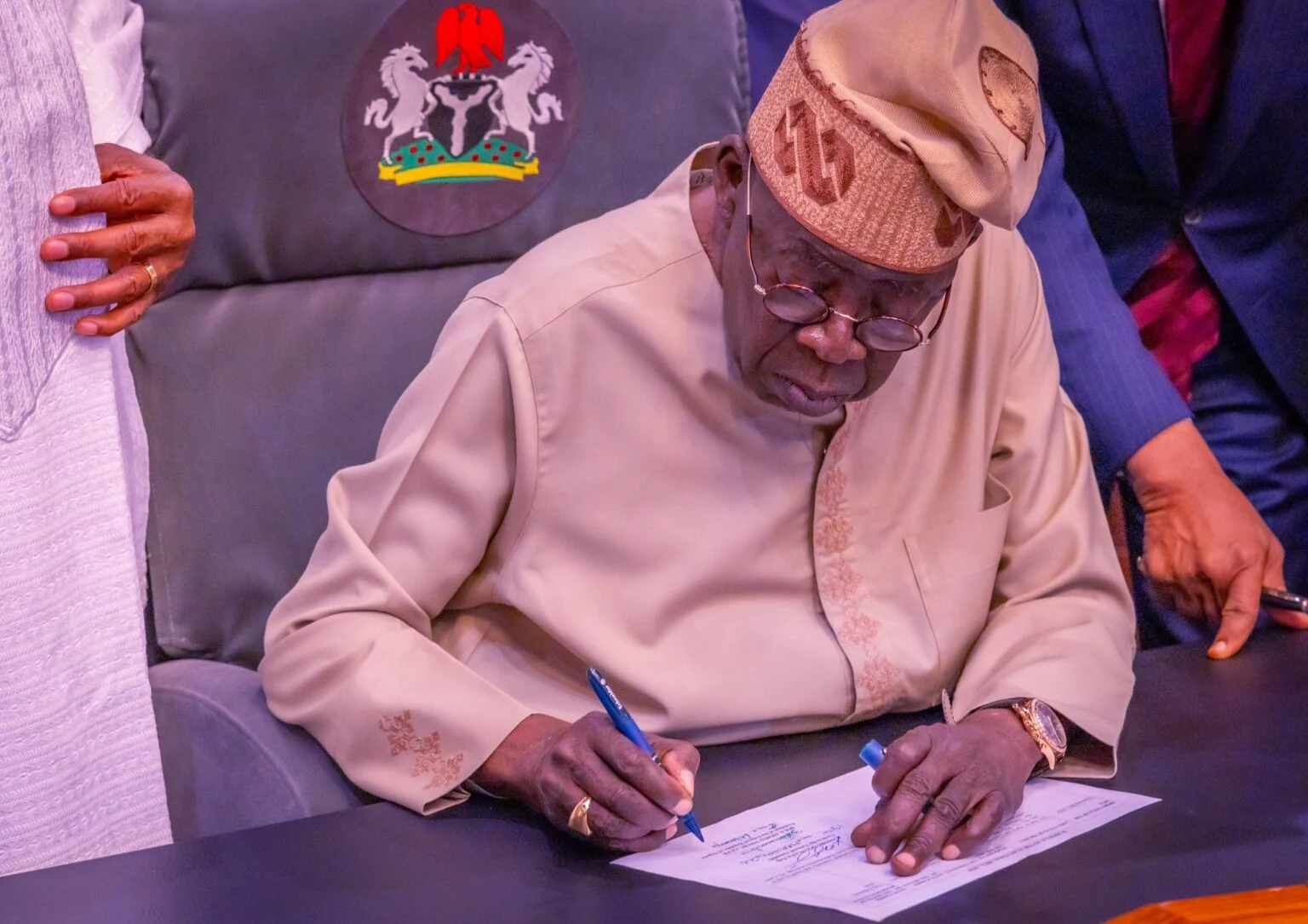

The executive order issued by Bola Ahmed Tinubu stopping the deduction of management fees and contributions to the Frontier Exploration Fund by the Nigerian National Petroleum Company Limited has effectively cut off revenue streams that generated more than N2tn over four years.
An analysis of monthly earnings submitted to the Federation Account Allocation Committee showed that the national oil company received about N20.7bn from such deductions in 2022, N695.9bn in 2023, N452.6bn in 2024 and N906.9bn in 2025 — bringing the total to roughly N2.1tn between 2022 and 2025.
The directive requires all oil and gas revenues due to the federation to be remitted in full before any operational deductions, aligning with constitutional fiscal provisions and transparency reforms in the sector. It effectively suspends automatic deductions such as management fees and Frontier Exploration Fund contributions prior to remittance.
The order prioritises constitutional rules governing the Federation Account over certain operational funding arrangements contained in the Petroleum Industry Act, raising debate over how statutory industry funding mechanisms will be handled going forward.
State governments and fiscal transparency advocates welcomed the move, arguing it would increase distributable revenues, improve accountability and address concerns about opaque deductions.
However, industry operators and legal analysts warned that the directive could create tension between existing provisions of the petroleum law and constitutional fiscal requirements, potentially generating policy uncertainty.
They noted that frontier exploration funding and joint venture financing were designed to support reserve growth and operational efficiency, cautioning that abrupt changes without alternative funding models could slow investment and affect production.
Labour groups, including the Petroleum and Natural Gas Senior Staff Association of Nigeria, called for clarity on implementation, stressing that reforms must not disrupt production or threaten jobs. They urged the government to establish transparent funding mechanisms for critical industry projects while ensuring strict oversight of remittances.
Data reviewed over the four-year period showed sharp fluctuations in NNPC’s retained deductions. After a modest N20.7bn in 2022, retained earnings surged dramatically in 2023, declined in 2024, and rebounded strongly in 2025 — highlighting the volatility of oil revenue flows.
Monthly figures revealed wide swings across the years, with deductions sometimes dropping sharply before recording significant spikes tied to fluctuations in production sharing contract profits and overall oil earnings.
Further findings indicated that NNPC could lose about N906.9bn annually from the suspension of management fees and frontier exploration deductions, with each category accounting for roughly half of that amount in 2025.
Energy experts said the directive could significantly reshape the structure of oil revenue flows, noting that if the deductions had been suspended earlier, the federation might have received the full N2.1tn — potentially strengthening fiscal buffers and infrastructure funding.
The order, which took immediate effect, requires the NNPC to remit gross revenues and seek approval for legitimate operational expenses through the budget process. Violations may be treated as breaches of a lawful executive directive.
Stakeholders remain divided. While many economists and state governments see the move as a step toward transparency, industry insiders warn it could disrupt production sharing contract operations, affect staff deployment and send cautious signals to investors, particularly in Nigeria’s deepwater oil segment.
Officials familiar with the sector said hundreds of personnel are dedicated daily to overseeing production sharing contracts across dozens of sites, and warned that changes to the funding structure could complicate monitoring, financing obligations and crude-backed loan repayments.
The Frontier Exploration Fund — created under the Petroleum Industry Act to support hydrocarbon exploration in frontier basins such as Chad, Sokoto, Anambra and Benue troughs — has been central to efforts to boost reserves and attract investment.
Supporters of the directive argue that such exploration should instead be financed through the national budget or private capital rather than automatic deductions from federation revenues.
Observers say the success of the policy will depend on transparent implementation, clear funding alternatives and the government’s ability to balance fiscal reforms with sustained investment in the oil and gas sector.

- 2027 will be my last presidency race — Atiku - April 15, 2026
- Uba Sani releases N4.289bn for Kaduna, LG pensioners - April 15, 2026
- Excessive interest rate hikes could derail economic reforms — Edun - April 15, 2026