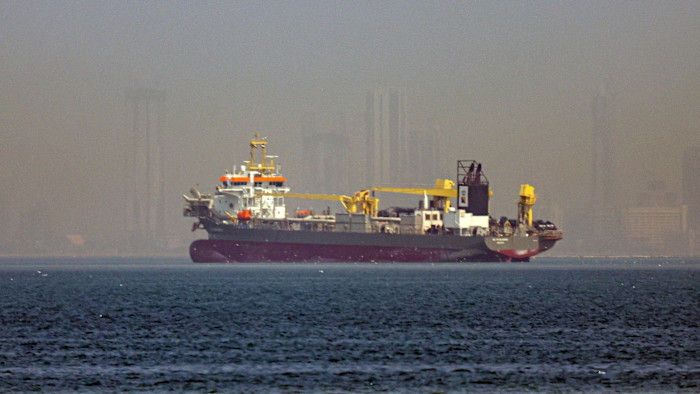
The United States is pushing for other countries to form an international coalition to restore freedom of navigation in the Strait of Hormuz.
This is contained in a State Department document, as oil prices surged to their highest in more than four years on fears of longer-term disruptions to global fuel supplies.
Two months into the war that started with U.S.-Israeli strikes on Iran, the vital sea channel remains closed, choking off 20% of the world’s supplies of oil and gas.
The closure of the Strait of Hormuz has sent global energy prices surging and heightened concerns about the risks of an economic downturn.
Efforts to resolve the conflict have hit an impasse, which the United States is trying to unlock with a naval blockade of Iran’s oil exports, the country’s economic lifeline.
With talks stalled, U.S. President Donald Trump is slated to receive a briefing on Thursday on plans for a series of fresh military strikes on Iran in hopes it will return to negotiations, according to an Axios report late on Wednesday.
That spurred big gains in oil prices, with the benchmark Brent crude contract topping $125 a barrel at one point, partly on technical factors related to the expiry of the contract later on Thursday.
The State Department document obtained by Reuters said the United States was inviting other countries to join a new international coalition that would enable ships to navigate the Strait of Hormuz after traffic through the waterway stalled.
The proposed coalition, dubbed the “Maritime Freedom Construct”, would share information, coordinate diplomatically and help enforce sanctions.
France, Britain, and other countries have held talks on contributing to such a coalition but said they were only willing to help open the Strait after hostilities cease.
Iran wants U.S. acknowledgment of its right to enrich uranium for what it says are peaceful, civilian purposes. It has a stockpile of about 440 kg (970 lbs) of uranium enriched to 60%, which could be used for several nuclear weapons if further enriched.
Putin warns Trump: Latest developments in Middle East war
Since the start of the year, Brent prices have more than doubled, rising on Thursday to their highest since March 2022, fuelling inflation and sending pump prices to politically painful levels worldwide.
Iran has pledged to continue disrupting traffic through the Strait as long as it is threatened, which may mean more Middle East oil supply disruptions from a conflict that has killed thousands.
Iran warned on Wednesday of “unprecedented military action” against continued U.S. blockading of Iran-linked vessels.
Trump has said Iran cannot have a nuclear weapon, while Tehran says its nuclear ambitions are peaceful.
“They don’t know how to sign a non-nuclear deal. They’d better get smart soon!” Trump said in a social media post on Wednesday, without explaining what such a deal would entail.
With Washington and Tehran trading public threats, mediator Pakistan was trying to avoid escalation while the two sides exchange messages on a potential deal, a Pakistani source said on Wednesday.

- Uba Sani fulfils N30m pledge to Kaduna youth innovators - September 16, 2026
- Presidency challenges Obi to quit 2027 race over Anambra debt claims - September 16, 2026
- Another accident occurs on Lagos-Ibadan Expressway amid heavy gridlock - September 16, 2026