

The United States has said Nigeria has not made sufficient progress in stopping attacks on Christian communities, warning that the country’s designation as a Country of Particular Concern (CPC) should remain in place.
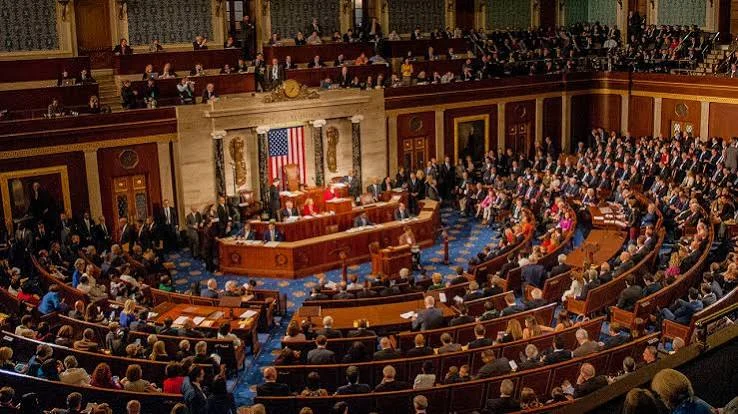
Assistant Secretary of State for African Affairs, Frank Garcia, made the assessment during a congressional hearing on violence in Nigeria on Thursday, while responding to questions from US Congressman Riley Moore.
Garcia acknowledged that the Nigerian government was taking steps to address the violence but said its efforts had yet to produce meaningful results and were not moving fast enough.
“Progress has not been there, but that doesn’t mean that Nigeria is dismissing concerns, and it doesn’t mean that they’re not taking actions, but it does mean that it hasn’t had an impact to this point,” he said.
Moore had questioned the Nigerian government’s efforts to dismantle militia strongholds and kidnapping camps in the Middle Belt, particularly in Benue and Plateau states.
He also asked what operations had been conducted since US Under Secretary of State for Political Affairs, Allison Hooker, raised concerns about the pace of Nigeria’s response in August.
The congressman further questioned why Benue and Plateau were excluded from the 10 states covered by Nigeria’s new forest guard initiative, despite persistent attacks in the areas.
He also noted that 1,000 presidentially approved security guards for Plateau State had yet to be deployed.
Moore insisted that the US should not remove Nigeria from the CPC list, saying the country had not done enough to address the violence.
“Before you answer that, we cannot take this CPC designation off of this country. They have not done enough,” he said.
Garcia described Nigeria’s current efforts as capacity-building, warning that the security measures were yet to become effective.
“I would have to characterise the Nigerians’ placement at this point as in building capacity. And that capacity is not deployed, is not being effective yet, and is not moving fast enough, as far as I’m concerned,” he said.
He, however, said Washington had seen signs of seriousness from the Nigerian government and an ongoing security deployment.
Garcia identified the US-Nigeria Joint Working Group as a key mechanism for monitoring Nigeria’s commitments and ensuring accountability.
In his prepared testimony, he said President Donald Trump’s administration had prioritised the persecution of Christians in Nigeria since the country was redesignated a Country of Particular Concern on October 31, 2025.
He cited a July 27 attack on a Christian community in Kaduna State and killings in Plateau State in August and September as evidence that the violence had continued despite diplomatic engagements.
Protesters demand Amupitan’s resignation outside Chatham House
“Unfortunately, the violence has not stopped,” Garcia said, describing the attacks as an ongoing atrocity.
He said the Joint Working Group had held its first meeting in Abuja in January and another in Washington in August, focusing on increased security deployments in vulnerable Middle Belt communities, faster responses to early warnings, accountability for perpetrators and deeper military cooperation.
The US, he added, had provided training and equipment to police units responsible for protecting vulnerable communities through its Bureau of International Narcotics and Law Enforcement Affairs.
Garcia also said Washington had expanded biometric information-sharing with Nigeria to help identify and prosecute perpetrators and worked with Nigerian financial institutions on an action plan to disrupt terrorist financing networks funding attacks on churches.
He said Hooker had also raised concerns about civilian casualties, the safe and voluntary return of internally displaced persons and transparency in humanitarian aid expenditure and delivery during the group’s second meeting.
Garcia acknowledged that Nigeria’s security architecture remained stretched and that access to justice in parts of the Middle Belt was limited.
He said the US would continue to use diplomatic engagements, the CPC designation and targeted security cooperation to push for the protection of Christian communities and accountability for those responsible for attacks.
The Nigerian government has consistently rejected claims of a Christian genocide or targeted religious persecution, maintaining that the country’s violence stems from wider security challenges, including banditry, terrorism and resource conflicts, which affect people of different faiths.

- US warns Nigeria over failure to stop attacks - November 13, 2026
- NYSC seeks 5,000-capacity orientation camps in states as corps population surges - November 13, 2026
- Protesters demand Amupitan’s resignation outside Chatham House - November 13, 2026