

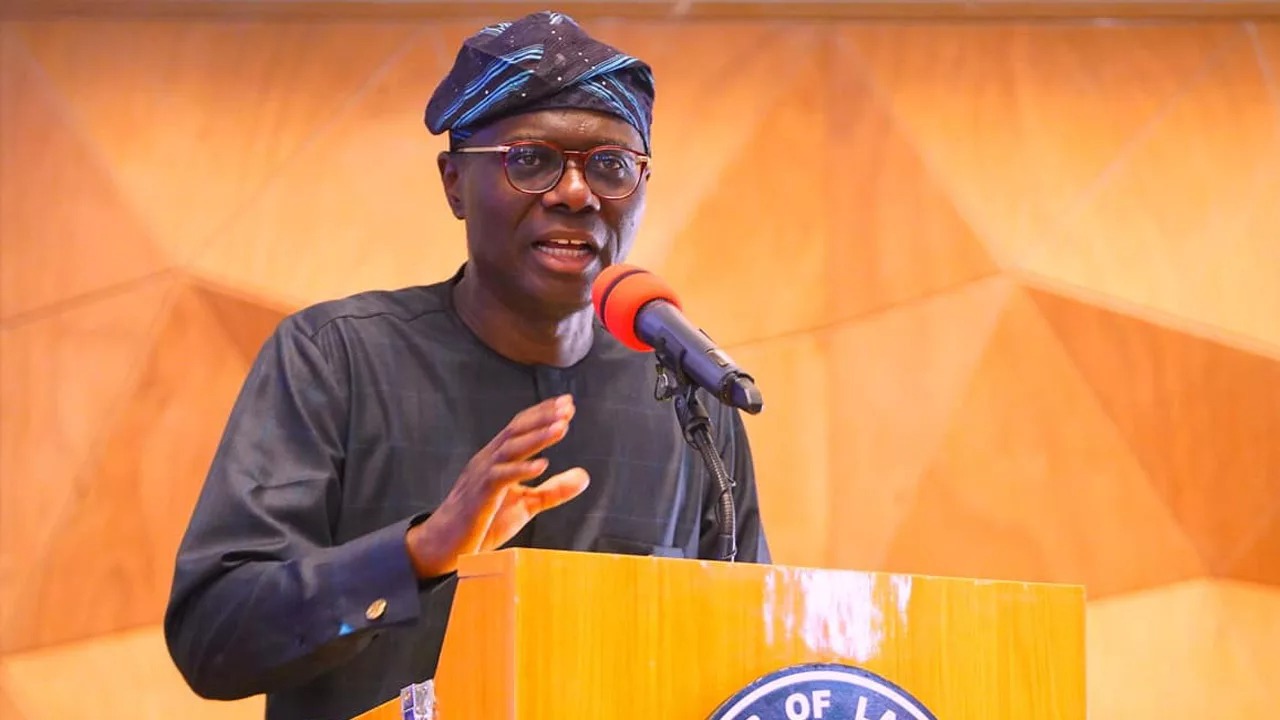
Lagos State Governor Babajide Sanwo-Olu has described the Dangote Refinery as more than an industrial facility, saying the project demonstrated Africa’s capacity to execute ambitious ventures capable of transforming markets.
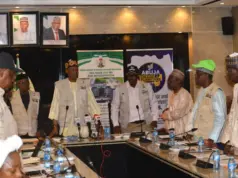
Sanwo-Olu spoke on Thursday at the launch of the Africa-Diaspora Leadership Programme 2026 Young Global Leaders Convening, themed “Building Africa at Scale,” held at the Dangote Refinery and Petrochemical Complex in Ibeju-Lekki, Lagos.
The governor said the scale of the refinery required the development of supporting infrastructure because existing facilities could not accommodate the project.
According to him, the refinery was constructed on land reclaimed from swamp, lagoon and open water, while a jetty and power plant were also developed to support its operations.
“Mr. Dangote did not build a refinery. He built a country around a refinery, and then he built the refinery,” Sanwo-Olu said.
He explained that the project required the construction of a jetty because there was no port capable of receiving some of the equipment, while inadequate power supply necessitated the development of a dedicated power plant.
Sanwo-Olu said the project also survived significant economic and operational challenges, including the COVID-19 pandemic and substantial currency depreciation.
“The plant was late; it cost far more than anyone had planned. It endured a pandemic, a currency that lost much of its value, and more than one season in which serious people whispered — quietly, and sometimes not so quietly — that it would never run,” he said.
“It runs. That is the first thing to note: Africa can build on a market-changing scale. Not in theory. The thing dismissed as unrealistic is the very thing you are standing inside.”
The governor, however, warned that Africa could not rely on individual entrepreneurs repeatedly overcoming infrastructure gaps to deliver major projects.
He said the real test of the refinery’s success should be whether subsequent industrial projects could be developed more easily because of the infrastructure and systems put in place.
“Scale that depends on one man building his own port and his own power plant is not real scale. It is heroism. And heroism does not repeat,” he said.
Sanwo-Olu said infrastructure projects undertaken by his administration, including the Lekki Deep Sea Port, Lekki Free Zone and Lagos Blue Line rail, were intended to create an enabling environment for future investors.
He also called for greater participation by African pension funds, sovereign wealth funds and members of the African diaspora in financing and owning strategic assets across the continent.
According to him, Africa’s next phase of economic growth requires collective investment and partnerships rather than dependence on individual entrepreneurs.
Addressing participants at the gathering, the governor urged the Young Global Leaders to move beyond conversations and convert relationships formed during the programme into practical initiatives capable of addressing Africa’s development challenges.
He drew parallels between Lagos and New York, describing both cities as examples of places shaped by ambitious people who refused to wait for perfect conditions before building.
“Carry that with you. Carry the numbers, yes, but carry the harder lesson too: that Africa does not need the world’s permission to build, and that the world, if it comes as a partner and not a prospector, will find that Africa has already started,” Sanwo-Olu said.

- Housing minister gives committee six weeks for reforms - September 10, 2026
- Many female entertainers are prostitutes — Mummy Wa - September 10, 2026
- Police nab serial burglar, recover N21m studio equipment - September 10, 2026