

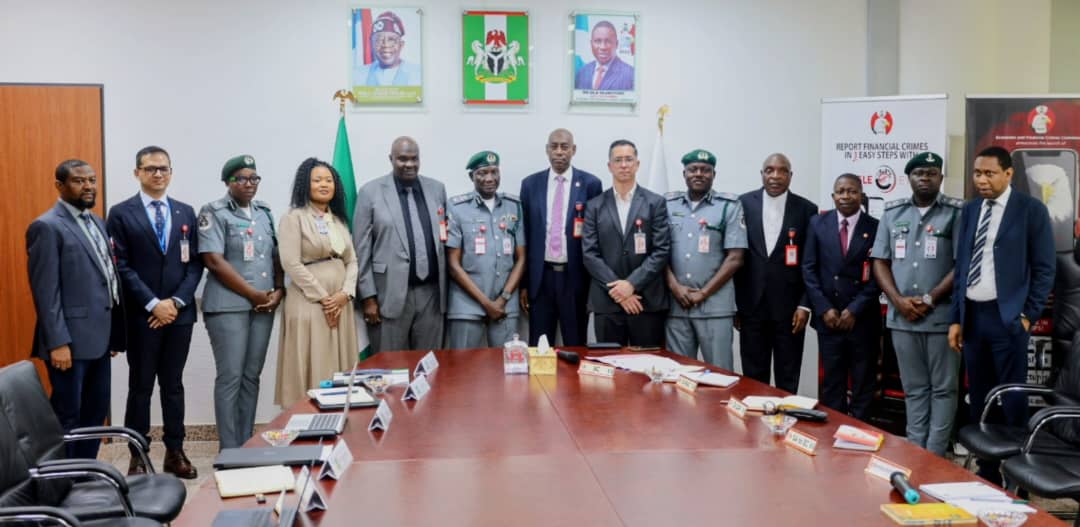
The Nigeria Customs Service (NCS), the World Customs Organization (WCO) and the Economic and Financial Crimes Commission (EFCC) have moved to strengthen collaboration to combat money laundering and terrorism financing in Nigeria.
The renewed partnership is expected to focus on intelligence sharing, case management, operational coordination and improving the country’s anti-money laundering and counter-terrorism financing framework.
The development followed a visit to the EFCC headquarters in Jabi, Abuja, on Tuesday by a delegation led by the Assistant Comptroller-General of Customs, M.S. Shuaibu.
The EFCC said in a statement on Wednesday that the visit was aimed at strengthening existing cooperation and identifying gaps in the implementation of anti-money laundering and counter-terrorism financing measures.
Shuaibu commended the commission for sustaining its longstanding relationship with Customs, stressing the need for closer collaboration to improve the effectiveness of both agencies.
“We are here to engage in existing collaboration to identify what is working and what needs improvement,” he said.
He added that the engagement would enable the agencies to examine case management, intelligence sharing and operational cooperation, while incorporating the WCO’s perspective and international best practices.
Responding, EFCC Executive Chairman Ola Olukoyede, who was represented by the commission’s Secretary, Mohammad Hammajoda, reaffirmed the agency’s commitment to strengthening its partnership with Customs.
Hammajoda said collaboration among relevant agencies had contributed to Nigeria’s removal from the Financial Action Task Force’s anti-money laundering grey list.
“Nigeria was earlier listed among the non-compliant states with anti-money laundering frameworks but with our own efforts and collaboration with other agencies, the country was delisted from the grey list,” he said.
He noted that the country’s improved standing had helped restore confidence in its financial system, including easing restrictions that affected international travel and the use of debit cards.
The EFCC secretary said the commission was ready to deepen its partnership with the WCO through capacity building, information sharing and operational cooperation.
He stressed the need for sustained efforts to prevent money laundering and ensure that Nigeria’s financial system was not exploited to finance terrorism.
The meeting comes amid ongoing efforts by Nigerian authorities to strengthen financial crime enforcement and align the country’s anti-money laundering measures with international standards.

- Tinubu mourns veteran journalist, Reverend Mobolade Omonijo - October 28, 2026
- Customs, EFCC, WCO strengthen partnership against money laundering - October 28, 2026
- APC unveils supplementary campaign council list - October 28, 2026