

Lukman Abdulmalik
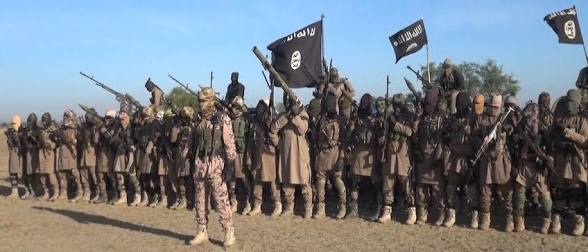
A senior commander of the Islamic State West Africa Province, identified as Ba’a Shuwa, has declined to accept a leadership appointment reportedly proposed by the Islamic State’s central command in Iraq following the killing of veteran ISWAP commander Abubakar Mainok in a joint Nigeria-United States counterterrorism strike in the Lake Chad region, intelligence sources have told THE STAR.
The reluctance has deepened a succession crisis within one of West Africa’s most dangerous terrorist organisations, fuelling internal disagreements and prompting fighters to relocate from traditional strongholds in the Lake Chad basin amid fears of further precision strikes.
Mainok, also known as Abu Bilal al-Mainuki or Abbor Mainok, was killed during a joint Nigeria-US counterterrorism operation in the Lake Chad Region Basin Area.
His death is assessed by analysts as one of the most significant leadership blows ISWAP has suffered in recent years, given that he simultaneously held operational authority, media oversight, ideological influence, and direct links to ISIS central leadership in Iraq — a combination that intelligence sources say is nearly impossible to replace.
“The leadership position was reportedly hinted to Ba’a Shuwa by ISIS central command in Iraq following the elimination of Mainok. However, available intelligence indicates that he is reluctant to take up the role at this time,” a source familiar with the development told THE STAR.
Sources say the hesitation appears rooted in the increasing lethality of intelligence-led operations against senior ISWAP figures. Military pressure in the Lake Chad region has intensified sharply in recent months, and Ba’a Shuwa is believed to have concluded that assuming a high-profile command role at this moment would make him a primary target.
ISWAP itself acknowledged Mainok’s death in a statement circulated through its official media channels on May 28 — an unusual public admission that analysts said underscored just how consequential the loss was.
The group claimed that US forces had tracked Mainok for approximately six months using drone surveillance before launching a multi-point airborne assault, describing the operation as disproportionate and asking rhetorically “what prompted crusader America to cross all these distances” for a single individual.
The statement, released about two weeks after the operation and following Eid-el-Kabir, said a newly established media facility in the Lake Chad forests was targeted during the strike.
Among those killed alongside Mainok were members of its ILANI media network, several foreign ISIS fighters, and other associates. The affected locations included Garin Abu Bilal — also known as Sahel — Garin Ba Bunu, west of Mangari, Satir-Kanama and Kwatan Fulani.
Open-source intelligence assessments have estimated that up to 175 fighters may have been killed in the operation.
Security analysts described it as the first known public acknowledgment by ISWAP that a senior leader had been killed during an operation involving direct US participation in the region.
Mainok’s portfolio within ISWAP was exceptionally broad. He coordinated insurgent activities across Nigeria, Niger, Chad and Cameroon while maintaining formal links with the wider Islamic State network.
Beyond battlefield coordination, his influence extended to media production, propaganda dissemination and international liaison — functions now distributed, weakened or in disarray following his elimination.
The ISWAP media infrastructure he oversaw operated through ISIS’s al-FURQAN unit and its ILANI network subset, both located within the Lake Chad Region Basin Area. Though degraded by the strikes, the group has since continued distributing content through AMAQ and al-NABA magazines.
The attempt to replace him has exposed deeper fissures within the organisation. ISIS central command, concerned about preserving leadership continuity after losing several influential figures in recent months, moved swiftly to identify a successor and discreetly reached out to senior ISWAP figures.
Ba’a Shuwa emerged as one of the preferred candidates. His refusal — or at minimum his reluctance — has not only prolonged the vacuum but also stoked tensions among competing factions jostling for influence.
“There are indications of internal disagreements regarding succession and the future direction of the organisation. The apparent reluctance of Ba’a Shuwa to step into the role has added to the uncertainty,” a second source told THE STAR.
The fallout has had visible operational consequences. Fighters have reportedly begun relocating from established positions in the Lake Chad axis, a move analysts interpret as both a tactical precaution against continued strikes and a symptom of organisational uncertainty at the top.
A separate internal debate is also understood to be underway regarding where the al-FURQAN media headquarters should be re-established following the destruction of its previous base in the strikes.
“The issue is not merely replacing a commander. Mainok occupied a unique position that combined operational authority, media oversight, ideological influence and links to ISIS central leadership. Such individuals are difficult to replace,” sources said.
Despite the turmoil, analysts caution against underestimating ISWAP. The group retains the capacity to adapt, reconstitute its command structure and prosecute attacks across the Lake Chad basin and adjoining border regions. Its demonstrated ability to absorb leadership losses and continue operations means the current crisis, however acute, may yet prove temporary.
The killing of Mainok and the succession paralysis it has triggered nonetheless represent a rare convergence of strategic and organisational setbacks for the group — one that Nigerian and allied security forces will be under pressure to exploit before ISWAP finds its footing.
ANALYSIS
A rare opening — but a narrow one
The death of Abubakar Mainok is not simply the removal of another name from a terrorist organogram. It represents the loss of an irreplaceable node in ISWAP’s command, communications and propaganda architecture — and the scramble to fill that void reveals, perhaps more clearly than any battlefield report, the organisation’s internal vulnerabilities.
What makes the current moment significant is not the death itself — ISWAP has lost commanders before and reconstituted — but the combination of factors converging simultaneously: the elimination of a uniquely multi-functional leader, the reluctance of his designated successor, the internal factional tensions that reluctance has aggravated, and the ongoing military pressure that is making senior figures think twice before accepting high-profile roles.
Ba’a Shuwa’s reported hesitation is, in strategic terms, a rational calculation. The pattern that killed Mainok — months of drone surveillance followed by a precision multi-point strike — is not a one-off event. It is a template.
Any commander who steps prominently into the vacancy is, by that act alone, advertising his location and significance to an intelligence apparatus that has already demonstrated its reach into the Lake Chad forests. The reluctance is not cowardice; it is threat awareness.
For Nigerian security forces and their US partners, this creates a rare but perishable opportunity. Leadership transitions in terrorist organisations are typically the moments of greatest vulnerability — when communication protocols are in flux, when loyalty networks are being renegotiated, and when operationally critical knowledge is not yet transferred.
The window for disruption is open, but it will not remain open indefinitely. ISWAP has proven adaptable; it will eventually find a successor, formalise a command structure and restore operational coherence.
The relocation of fighters from the Lake Chad axis is the most immediate tactical signal that the organisation is under genuine stress. When foot soldiers begin moving without clear directive from a functional command, it signals both fear and the absence of coordinating authority — two conditions that, if sustained and exploited, can fracture cellular structures.
Yet the caution in AMAQ and al-NABA continuing to publish is instructive. ISWAP understands the psychological dimension of its war. The media apparatus survived the physical destruction of the ILANI facility, at least partially, and the group will work to project continuity and resilience even amid internal disorder. Narrative control remains a strategic asset it will fight to preserve.
The deeper question for Nigerian security policy is whether the operational tempo that produced the Mainok strike — intelligence-intensive, precision-oriented, US-partnered — can be sustained and institutionalised, or whether it remains an exceptional rather than routine capability. The answer will determine how much of the current opportunity can be converted into durable strategic gain.
For now, ISWAP is navigating its most acute internal crisis in years. How long that crisis lasts depends considerably on decisions being made not in Abuja or Washington, but in the forests of the Lake Chad basin — where a reluctant commander is weighing whether the price of power has become too high to pay.

- Shettima inaugurates Tinubu campaign office, says North’s support is not a blank cheque - October 17, 2026
- Okonjo-Iweala: My mother was kidnapped over $2.4bn fuel subsidy fraud probe - October 17, 2026
- Wike to Rivers voters: Support Tinubu in 2027, don’t hand Nigeria to political gamblers - October 17, 2026