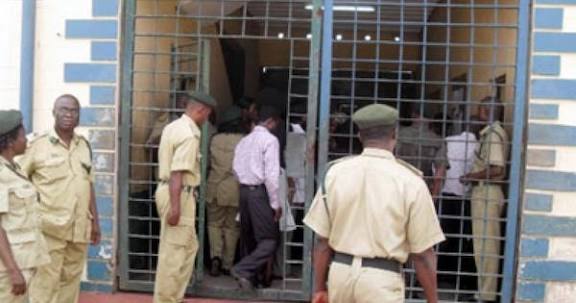
Security agencies have reinforced surveillance at the Nnamdi Azikiwe International Airport and correctional facilities in Abuja and Niger State following intelligence reports of a coordinated terrorist plot to attack the sites and free detained insurgents.
The Nigeria Police Force, Nigeria Immigration Service, and Nigeria Correctional Service confirmed the measures on Thursday, describing them as proactive responses to a credible threat.
The development follows a Washington Post report on an internal Nigerian Customs Service memo, dated April 13, 2026, and signed by Deputy Comptroller General Timi Bomodi, which disclosed plans by fighters of the Islamic State West Africa Province, Boko Haram, Ansaru, and Jama’at Nusrat al-Islam wal-Muslimeen to attack the Nnamdi Azikiwe International Airport, the Kuje Custodial Centre in the FCT, and a military detention facility in Wawa, Niger State.

The two-page document warned that ISWAP fighters had already infiltrated the FCT ahead of the planned strikes, and drew parallels between the scheme and Islamic State attacks on aviation facilities in Niamey and Tahoua in the Niger Republic — suggesting a deliberate intent to replicate the pattern on Nigerian soil.
The threat is not without precedent. In July 2022, a coordinated assault on the Kuje Correctional Centre by multiple terrorist groups freed 64 detainees. Three months later, terrorists attempted to breach the Wawa Cantonment in Borgu LGA of Niger State to release detained insurgents, though the attack was repelled with several assailants killed or arrested.
The Sadiku Boko Haram faction — which operates alongside Ansaru and JNIM near Kainji Lake National Park — has also been active in the region. The group relocated from Shiroro LGA, Niger State, to the Kainji axis in July 2025 and subsequently abducted over 300 students and staff from St. Mary’s Catholic School in Papiri. It has also been linked to the kidnapping of more than 100 women and children from Woro in Kwara State and communities in Niger State.
In response to the memo, the Customs Service directed operatives to strengthen surveillance around the airport and other strategic assets, ordered thorough screening of all visitors, and deployed specialised anti-smuggling and intelligence units to reinforce vulnerable points.
The Airport Police Command’s spokesperson, Adeola Muhammed, said the command remained “fully alert and in control,” adding that multiple layers of checks at the aerodrome were capable of detecting suspicious activity.
“The command is always aware of potential security threats, and we are prepared to scale up measures as the situation demands. Whether you are entering or exiting the airport, you will be thoroughly screened,” he said.
The Immigration Service’s spokesperson, Akinsola Akinlabi, said the NIS had heightened security at all FCT facilities and expressed confidence in the response of the police and military.
The Nigerian Correctional Service, through its spokesperson Jane Osuji, said custodial centres had been placed on high alert nationwide, particularly in the FCT, and urged Nigerians to go about their daily activities without panic.
Security analysts, however, raised concerns about systemic gaps in Nigeria’s response to intelligence warnings. Chidi Omeje cautioned that past failures to act on detailed threat reports had led to avoidable attacks.
“The very clear thing the government should do is to take intelligence reports seriously. We’ve had such experiences before where warnings were detailed, yet the predictions came to pass,” he said.
Lekan Jackson-Ojo criticised what he described as a recurring pattern of inadequate and short-lived security deployments, and warned against concentrating resources in Abuja at the expense of other vulnerable states.
“If all attention is shifted to Abuja, it creates loopholes elsewhere, which these groups can exploit,” he said, specifically naming Niger, Sokoto, and Zamfara as at-risk areas.
—
**744 ex-insurgents graduate de-radicalisation programme**
Separately, no fewer than 744 former terrorists and victims of violent extremism on Thursday graduated from the Federal Government’s De-radicalisation, Rehabilitation and Reintegration Camp under Operation Safe Corridor, in a ceremony held in Gombe.
The graduates include 597 from Borno, 58 from Yobe, 15 from Kano, 12 from Bauchi, and 10 from Adamawa, among others. Four participants are from Niger Republic, two from Chad, two from Burkina Faso, and one from Cameroon. Of the total, 733 are Muslims and 11 are Christians.
Chief of Defence Staff Gen. Olufemi Oluyede, represented by Rear Admiral Kabiru Tanimu, described the programme as a strategic, not sentimental, tool for combating extremism.
“This is not a reward but a deliberate strategy to reduce violence, weaken extremist recruitment and promote long-term stability,” Oluyede said, adding that kinetic military operations alone cannot guarantee lasting peace.
He urged the graduates to embrace their second chance, warning them firmly against a return to violence. “Nigeria is giving you a second chance; do not waste it,” he said.
Operation Safe Corridor Coordinator Brig. Gen. Yusuf Ali said the beneficiaries underwent psychosocial support, vocational training, religious reorientation, civic education, and behavioural transformation, noting that many had been coerced or abducted into militant groups.
“From this moment, they have the opportunity to reclaim their identity, rebuild their lives and pursue a future defined not by conflict but by purpose,” he said.
Gombe State Governor Muhammad Yahaya, represented by his SSA on Security and Intergovernmental Affairs, Amb. Yusuf Musa, charged the graduates to become law-abiding, productive citizens.
“You’ve been given a second chance; do not take it for granted. Do not betray the trust that Nigeria has placed in you,” he said.

- Housing minister gives committee six weeks for reforms - September 10, 2026
- Many female entertainers are prostitutes — Mummy Wa - September 10, 2026
- Police nab serial burglar, recover N21m studio equipment - September 10, 2026