Lukman Abdulmalik
For decades, Aliko Dangote’s fortune was largely associated with cement.
That is no longer the case.
The Nigerian industrialist’s biggest wealth engine is now an asset that, only a few years ago, looked like one of Africa’s most ambitious—and riskiest—industrial bets: his Lagos-based oil refinery.
As the Dangote Petroleum Refinery opens its shares to the Nigerian public, the valuation of the business has propelled Dangote’s estimated fortune beyond $50bn, according to Forbes’ real-time billionaire ranking.
Forbes reported that an earlier private placement dramatically increased the implied value of the refinery, adding about $20bn to Dangote’s paper wealth and taking his fortune to roughly $51bn.
The extraordinary jump is not simply because Dangote received $20bn in cash.
It is largely a consequence of valuation.
When investors put money into a private company at a particular price, that transaction can establish a much higher market value for the entire business. Because Dangote still owns the overwhelming majority of the refinery, the increased value of his remaining stake translates into a much larger estimated net worth.
That is what has happened with the refinery.
From a $20bn project to a nearly $50bn company
The Dangote refinery cost about $20bn to build and took more than a decade to develop.
It began operations in 2024 and has since grown into Africa’s largest single-train refinery. It was designed for 650,000 barrels per day but has recently demonstrated output of about 700,000 barrels per day. The company is targeting an eventual expansion to 1.4 million barrels per day.
The scale is important because the refinery is not simply another factory in Dangote’s portfolio.
It is an integrated industrial complex capable of producing petrol, diesel, aviation fuel, liquefied petroleum gas and other products for Nigeria and export markets.
And its financial performance is beginning to catch up with its physical size.
Reuters reported that the refinery recorded a $1.82bn net profit in the first half of 2026, compared with a loss of $476m in the same period of the previous year. Revenue exceeded $13bn.
That turnaround has changed the investment story around the refinery.
What was once primarily a giant capital project is increasingly being valued as a profitable energy company with enormous expansion potential.
The transaction that changed Dangote’s wealth
In July, the refinery completed a private equity placement that raised about $2.5bn.
The deal was 3.7 times oversubscribed, according to the company, indicating that investors were willing to put substantially more money into the transaction than was initially available.
The investors included major African development finance institutions.
The Africa Finance Corporation said it led a group of strategic investors in the transaction, describing the refinery as a roughly $20bn integrated refining and petrochemical complex.
For Dangote, the significance went beyond the money raised.
The transaction provided an externally tested valuation for the refinery and helped establish a much higher value for the company.
Forbes subsequently calculated that the implied valuation of the refinery jumped to about $42bn, helping push Dangote’s fortune up by approximately $20bn to $51bn.
In other words, Dangote did not suddenly find $20bn sitting in a bank account.
The value of what he owned changed.
Now comes the public market
The next stage is even more consequential.
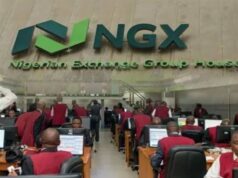
On September 14, Dangote opened the refinery to public investors through an initial public offering that is expected to become Africa’s largest-ever IPO.
The company is offering 4.1 billion shares at N525 each, targeting about N2.15tn, or roughly $1.6bn. The offer is scheduled to close on October 13, with trading expected to begin later in November.
At the offer price, the refinery is valued at roughly N63tn, or $47.6bn, according to Reuters. Other market estimates have placed the valuation close to $49bn.
For ordinary Nigerians, perhaps the most striking feature is the low entry point.
Investors can subscribe for as little as 10 shares, costing N5,250.
That is deliberate.
Dangote has described the transaction not merely as a fundraising exercise but as an attempt to spread ownership of one of Africa’s biggest industrial assets among Nigerians.
“Selling these shares now is us making sure that we create wealth for other people,” he told Forbes, comparing the idea to the wealth creation associated with companies such as Amazon and Microsoft.
But Dangote remains firmly in control
Opening the refinery to public investors does not mean Dangote is giving up control.
The public offer represents only a small fraction of the company.
Reuters reported that the offering is for about 3% of the refinery, while other reporting puts the public portion at approximately 3.3%. Dangote is expected to retain a dominant stake even after the transaction.
That means the same mechanism that created his latest wealth increase could work in his favour again.
If investors push the refinery’s valuation higher after listing, the value of Dangote’s remaining shares rises with it.
If the company performs poorly or its valuation falls, the reverse happens.
That is the essential difference between net worth and cash.
Why investors are betting on the refinery
The refinery’s attraction lies partly in Nigeria’s long-standing dependence on imported petroleum products.
For decades, Africa’s largest oil producer remained heavily reliant on imported refined fuel because its domestic refineries could not consistently meet demand.
Dangote is attempting to reverse that equation.
The refinery has increasingly supplied Nigeria while also exporting products to international markets. Reuters reported that the facility has been operating at around 700,000 barrels per day and is targeting a doubling of capacity to 1.4 million barrels per day.
The planned expansion is one reason the IPO matters beyond the Dangote family fortune.
The $1.6bn public offering is expected to provide additional capital for expansion and strengthen the refinery’s ability to raise money in future.
Dangote has also outlined ambitions that go beyond Nigeria, including plans for another major refinery project in Kenya.
From Kano trader to Africa’s richest man
The refinery is the latest chapter in a business story that began on a much smaller scale.
Dangote was born into a prominent business family in Kano and was influenced by his grandfather, Sanusi Dantata, a successful commodities trader.
As a child, Dangote has recalled buying sweets and giving them to other children to sell, keeping the profits for himself.
After studying at Al-Azhar University in Cairo, he returned to Nigeria and began building the trading business that eventually became the Dangote Group.
The group expanded from commodities into manufacturing, particularly cement, sugar and other consumer products.
Dangote Cement became the foundation of his fortune. He remains the majority owner of the publicly traded cement company through a holding structure.
The refinery, however, represents a fundamentally different proposition.
Cement made Dangote one of Africa’s richest industrialists.
Oil refining could make his fortune substantially larger.
The $50bn figure is not the end
The most important question is no longer why Dangote has crossed the $50bn threshold.
It is how high his wealth could go if the refinery continues to perform.
Forbes’ estimate reflects the value of Dangote’s ownership at prevailing private-market and transaction-based valuations. The refinery’s public listing will introduce a new variable: a continuously changing market price.
That could create another substantial increase in Dangote’s wealth if investors assign a higher valuation to the company.
And there is plenty of room for that valuation to change.
The refinery is already generating billions of dollars in revenue, has returned to profitability, is operating at enormous scale and is preparing for another major expansion.
Dangote is also betting that the refinery can become more than a Nigerian fuel supplier.
His ambition is to build an African industrial powerhouse capable of competing globally in refining, petrochemicals and manufacturing.
That is why the IPO is more than a stock-market event.
It is a public test of whether one of Africa’s most expensive private industrial projects can evolve into one of its most valuable companies.
For Dangote, the stakes are personal as well as economic.
The man who built his fortune from trading commodities is now offering millions of investors a chance to own a piece of the refinery that has transformed the scale of his wealth.
And if the market believes the best years of the refinery are still ahead, the $50bn milestone may eventually look like only the beginning.

- How Dangote’s refinery turned him into $50bn-plus billionaire - September 15, 2026
- Sokoto sets up panel to probe mosque attack - September 15, 2026
- Tinubu warns regional commissions against wasteful projects - September 15, 2026